Documentary Explores Indigenous History of California
A new documentary series, 'People of the West,' delves into the history of California's Indigenous communities through Native voices and perspectives, highlighting overlooked aspects of their past and ongoing struggles…
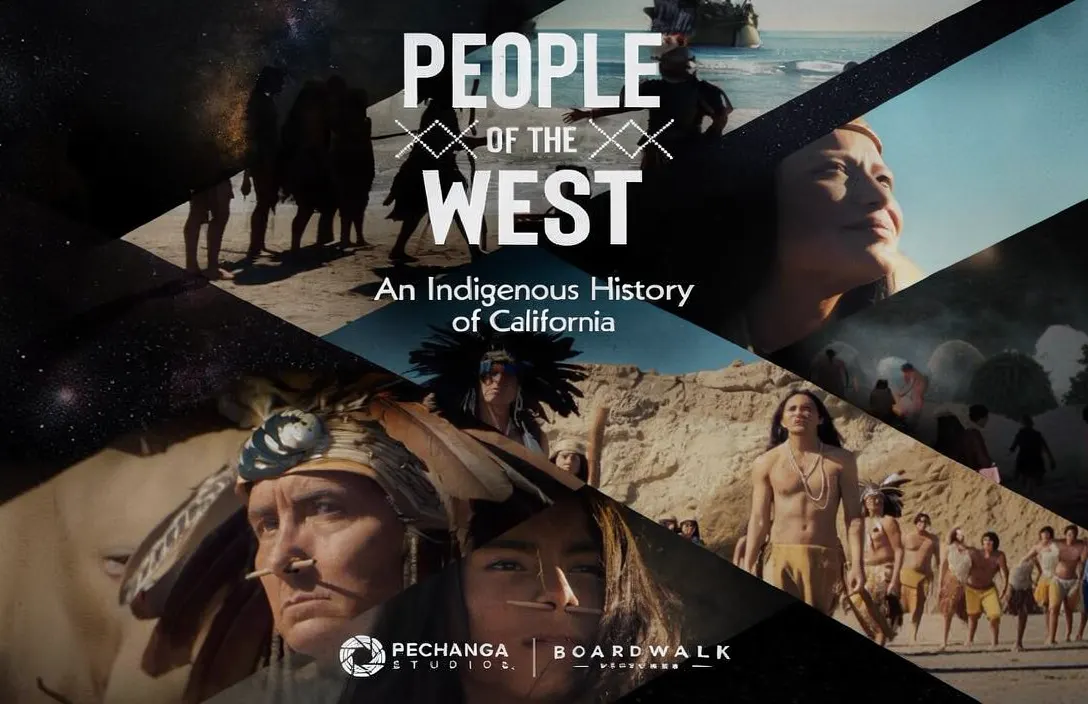
The 10-episode documentary series 'People of the West' offers a cinematic journey through 500 years of California's Indigenous history, as told through Native voices. Episodes such as 'First Contact,' 'Gold Rush,' 'Genocide,' and 'Boarding Schools' aim to uncover the hard truths behind myths of the American West. Historians and cultural experts, including Caitlin Keliiaa, an associate professor of history and scholar of Native American history, contributed to the project. Keliiaa, who is of Yerington Paiute and Washoe heritage, is featured in six of the series’ ten episodes, bringing her scholarly perspective and Indigenous knowledge to a project that seeks to correct historical omissions and distortions (Source ID 1). [1]
The documentary series follows the history of Native nations from before European contact through colonization, genocide, forced assimilation, political resistance, and the contemporary movement for cultural renewal and tribal sovereignty. It was created by Brad Munoa, an enrolled member of the Pechanga Band of Indians and director of Pechanga Studios. Munoa developed the idea after witnessing distorted and incomplete versions of Native history in his children's classrooms, which inspired him to create a series that could bring Native history to a wider audience and provide educators with a more accurate and culturally grounded resource (Source ID 1). [1]
Keliiaa’s participation is especially significant because her scholarship examines how Native people, particularly Native women, have navigated and challenged systems of colonial power. Her work centers on Native voices that have frequently been overlooked in conventional historical accounts. The series' central commitment is to present history not only as a succession of political events and government policies but as the lived experience of individuals, families, and communities (Source ID 1). [1]
“People of the West” is a 10-episode documentary series that spans California’s Indigenous history over 500 years, focusing on topics such as the Gold Rush, state-sanctioned genocide, and the legacy of federal boarding schools. The series was created by Brad Munoa, an enrolled member of the Pechanga Band of Indians, and produced by Pechanga Studios. The project began several years prior to its release in 2026 and took over six years to complete, reflecting its ambitious scope and the depth of research required to accurately represent Native histories. The series is available internationally for free on FNX.org during November 2026, accessible on devices and streaming platforms such as Roku, Firestick, Apple TV, and smart TVs via the FNX app. The production team emphasized involving Native voices throughout the creative process, ensuring that Native people were not only subjects of the documentary but also active participants as directors, producers, and crew members. [1]
Advertisement
The documentary series is rooted in the history of Native nations in California, beginning with their existence before European contact and covering colonization, forced assimilation, political resistance, and the contemporary movement for cultural renewal and tribal sovereignty. The series includes dramatic reenactments, archival materials, oral histories, and expert testimony to convey the lived experiences of Native communities. One of the key figures involved in the production is Caitlin Keliiaa, an associate professor of history with Yerington Paiute and Washoe heritage. Keliiaa’s scholarship focuses on how Native people, particularly Native women, have navigated and challenged colonial systems. Her participation in six of the ten episodes highlights the project’s commitment to centering Indigenous perspectives and correcting historical omissions. [1]
The documentary addresses the devastating impact of historical violence on California’s Indigenous population, particularly during the Gold Rush era and the subsequent decades. Keliiaa notes that the Native population in California declined significantly by the early 20th century, with only 1,500 Washoe people now living in California and Nevada, a fraction of the pre-colonial population. This decline is attributed to massacres, state-sanctioned killings, and the reimbursement of militias by the state of California for exterminating Native people. The series also explores the cultural survival of the Washoe people, including efforts to revitalize the Washoe language, which is considered a language isolate. Keliiaa’s master’s research focused on this language, highlighting the impact of policies like English-only education and boarding schools on linguistic erosion. [1]
The documentary series also touches on the issue of land reclamation for Native communities, particularly the Washoe people, whose ancestral territory includes Lake Tahoe. Keliiaa emphasizes that while the Washoe Tribe of California and Nevada owns only a small fraction of land in the area, it remains central to their cultural identity. The series aligns with the growing movement for land-back initiatives across the United States, where tribes are seeking to return ancestral lands and restore Indigenous stewardship practices. Keliiaa praises the production for being Native-led, with Native people involved in all levels of the creative process, from on-camera roles to behind-the-scenes positions. This approach ensures that the series is not only historically accurate but also culturally grounded and respectful of Indigenous perspectives. [1]
The 10-episode documentary series 'People of the West' offers a cinematic journey through 500 years of California's Indigenous history, as told through Native voices. The series includes episodes such as 'First Contact,' 'Gold Rush,' 'Genocide,' and 'Boarding Schools,' which uncover hard truths behind myths of the American West. The documentary was created by Brad Munoa, an enrolled member of the Pechanga Band of Indians and director of Pechanga Studios. Munoa developed the idea after witnessing his own children encounter distorted and incomplete versions of Native history in their classrooms, as noted in the Sierra Sun Times (Source ID 1). [1]
Advertisement
Among the historians and cultural experts involved in the project is Caitlin Keliiaa, an associate professor of history and a scholar of Native American history. Keliiaa, who is of Yerington Paiute and Washoe heritage, is featured in six of the series' ten episodes, bringing her scholarly perspective and Indigenous knowledge to the project. The filmmakers first reached out to Keliiaa several years ago, and the production took more than six years to complete, as detailed in the Sierra Sun Times (Source ID 1). [1]
Keliiaa’s participation is especially significant because her scholarship examines how Native people, particularly Native women, have navigated and challenged systems of colonial power. She studies Native American experiences in the Western Pacific region, with research exploring the intersections of race, gender, labor, and federal Indian policy. Her work draws on oral histories, interviews, archival research, and community-engaged scholarship, centering Native voices that have frequently been overlooked in conventional historical accounts, as highlighted in the Sierra Sun Times (Source ID 1). [1]
Sources
Prepared with AI assistance from the cited sources.
The Cali Reporter newsletter
The stories worth your time.
California, the country, and what comes next. Join our free newsletter for reporting that keeps you informed.
More in California
- Survivors Support Governor Newsom's Commutation of Death Sentences
Survivors of violent crime in California have expressed support for Governor Gavin Newsom's decision to commute all death sentences, emphasizing the need for healing and resources over state-sanctioned killing.
- Caltrans Announces Winter Closure of Mountain Passes
Caltrans has officially closed several mountain passes in California due to recent snowfall and adverse weather conditions, ensuring the safety of drivers and maintenance crews.
- Bipartisan Legislation Revitalizes American Boxing
U.S. Senators Jacky Rosen and Ted Cruz have celebrated the passage of the Muhammad Ali American Boxing Revival Act, a bipartisan bill aimed at modernizing federal boxing regulations and protecting boxers.