Art Curator Explores Neoliberal Influence in Art World
A new book by Marco Baravalle delves into the co-optation of radical politics by the art establishment, highlighting the role of collectives in resisting these trends.

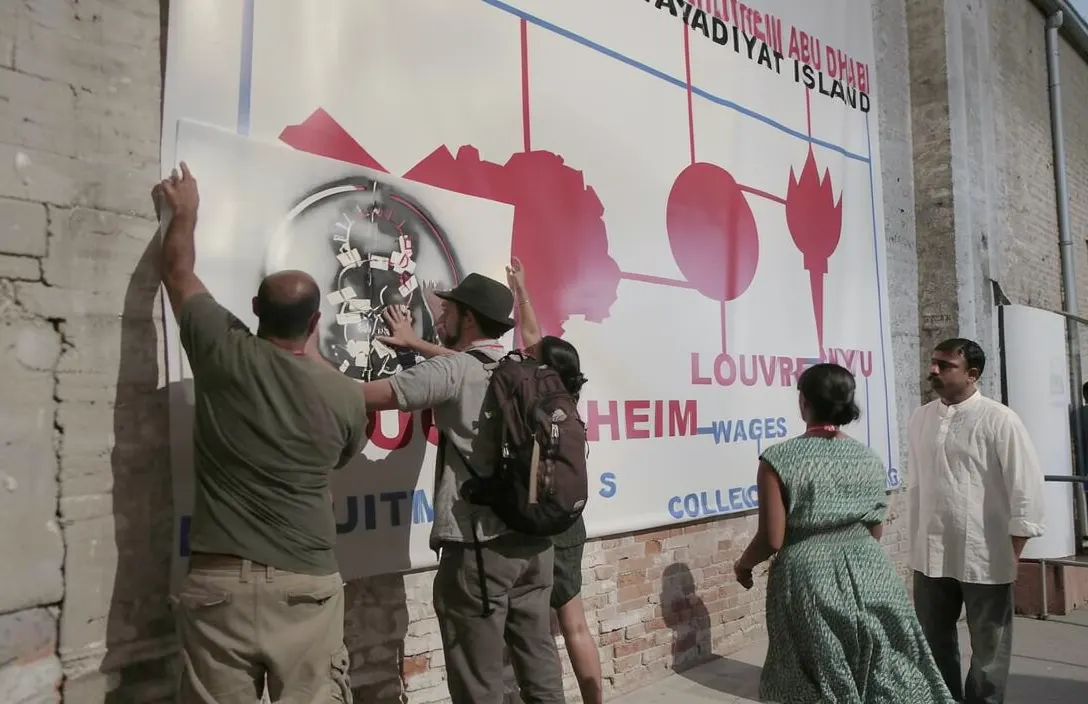
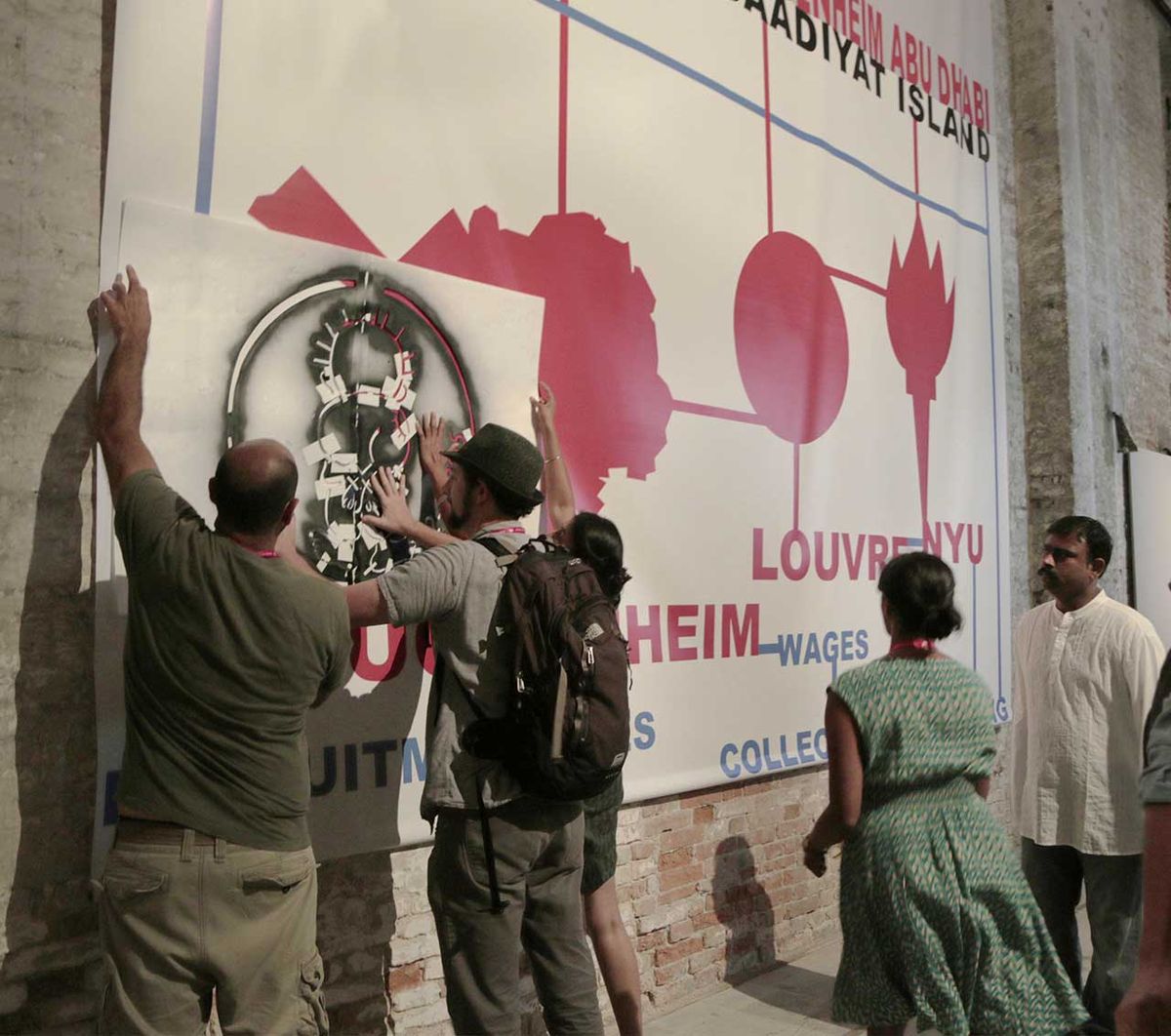
In his book, 'The Battleground of Art: Radical Curating in the Crisis of Neoliberalism,' Marco Baravalle examines how the art establishment has adopted and commodified radical political movements. The book builds on Baravalle's long-standing work as a curator and activist, tracing his involvement in events such as the 56th Venice Biennale in 2015, where he collaborated with the Gulf Labor Coalition and the Global Ultra Luxury Faction (G.U.L.F.) (Hyperallergic). [1]
At the 56th Venice Biennale, Baravalle and his collaborators were part of a broader movement that included a boycott of the Guggenheim Abu Dhabi and direct actions aimed at exposing the exploitation of migrant workers in the construction of the museum. These events highlighted the tensions between art as a tool for activism and the commercial interests of major art institutions (Hyperallergic). [1]
Baravalle's book extends these efforts by offering a critical analysis of the neoliberal capture of the art world, while also emphasizing the importance of abolitionist and autonomous practices that challenge the status quo. The work is framed as a continuation of the praxis developed through years of collective organizing and resistance (Hyperallergic). [1]
In his book, 'The Battleground of Art: Radical Curating in the Crisis of Neoliberalism,' Marco Baravalle examines how the art establishment has adopted and commodified radical political movements. At the 56th Venice Biennale, Baravalle and his collaborators were part of a broader movement that included a boycott of the Guggenheim Abu Dhabi and direct actions aimed at exposing the exploitation of migrant workers in the construction of the museum (Hyperallergic). [1]
Advertisement
Baravalle's work extends these efforts by offering a critical analysis of the neoliberal capture of the art world. The book highlights the role of autonomous spaces in Venice and Milan, which serve as infrastructure for collective organizing, resistance, and enacting alternative models of society (Hyperallergic). [1]
Eleven years after the 56th Venice Biennale, Baravalle's book continues the praxis of resistance by presenting movement-generated theory and practice. It confronts the neoliberal capture of the art world while also exploring histories and practices of abolition and autonomy that offer alternative possibilities (Hyperallergic). [1]
In his book, 'The Battleground of Art: Radical Curating in the Crisis of Neoliberalism,' Marco Baravalle dissects the art establishment's co-optation of radical politics and uplifts the stories of collectives that resist it (Hyperallergic). Baravalle's work is grounded in his experiences at the 56th Venice Biennale, where he collaborated with the Gulf Labor Coalition and its autonomous direct-action wing, Global Ultra Luxury Faction (G.U.L.F.), to expose the exploitation of migrant workers in the construction of the Guggenheim Abu Dhabi (Hyperallergic). [1]
At the 56th Venice Biennale in 2015, Baravalle and his collaborators were part of a broader movement that included a boycott of the Guggenheim Abu Dhabi and direct actions aimed at exposing the exploitation of migrant workers in the construction of the museum (Hyperallergic). These actions were part of a larger effort to challenge the neoliberal capture of the art world and to promote abolitionist and autonomous practices (Hyperallergic). [1]
Advertisement
Eleven years after the 56th Venice Biennale, Baravalle's book continues the praxis of resistance by presenting movement-generated theory and practice. Drawing on his two decades of experience, Baravalle offers what we have called movement-generated theory and practice, rooted in the dialectic of doing and knowing (Hyperallergic). [1]
In his book, 'The Battleground of Art: Radical Curating in the Crisis of Neoliberalism,' Marco Baravalle dissects the art establishment's co-optation of radical politics and uplifts the stories of collectives that resist it (Hyperallergic). Baravalle's work is deeply rooted in his experiences at the 56th Venice Biennale, where he collaborated with the Gulf Labor Coalition and its autonomous direct-action wing, Global Ultra Luxury Faction (G.U.L.F.), to expose the exploitation of migrant workers in the construction of the Guggenheim Abu Dhabi (Hyperallergic). [1]
At the 56th Venice Biennale in 2015, Baravalle and his collaborators were part of a broader movement that included a boycott of the Guggenheim Abu Dhabi and direct actions aimed at exposing the exploitation of migrant workers in the construction of the museum (Hyperallergic). These actions were part of a larger effort to challenge the neoliberal capture of the art world and to advocate for the rights of migrant laborers involved in the project (Hyperallergic). [1]
Eleven years after the 56th Venice Biennale, Baravalle's book continues the praxis of resistance by presenting movement-generated theory and practice. Drawing on his two decades of experience, Baravalle offers what we have called movement-generated theory and practice, rooted in the dialectic of doing and knowing (Hyperallergic). The book confronts the neoliberal capture of the art world, while also excavating histories and practices of abolition and autonomy that offer other possibilities (Hyperallergic). [1]
Advertisement
The Cali Reporter newsletter
The stories worth your time.
California, the country, and what comes next. Join our free newsletter for reporting that keeps you informed.
More in Culture
- Protesters Call on Steven Spielberg to Boycott MoMA Over Leon Black's Epstein Ties
Activists gathered outside MoMA to protest the museum's ties to Leon Black, a board member with connections to Jeffrey Epstein, and urged Spielberg to reject an honor at the Debra and Leon Black Family Film Center.
- Art and Inequality in Contemporary Journalism
A recent article in Hyperallergic highlights the intersection of art, inequality, and contemporary journalism, featuring insights from data journalist Mona Chalabi and other notable figures in the art world.