El Niño's Influence on North American Winter Weather
The current El Niño, already the strongest on record, is expected to significantly impact winter weather patterns across North America, with varied effects on different regions.


The developing El Niño, which is already the strongest on record by some measures, continues to grow and could have profound effects on the weather across North America this autumn and winter. This naturally-occurring climate phenomenon sees trade winds over the Pacific Ocean, which usually blow from east to west, weakening or reversing with warm water instead spreading eastwards. This releases heat into the atmosphere, which can drive major shifts in global weather patterns. Impacts in the US and Canada are varied, with a greater chance of a warm and dry winter in northern areas and more risk of flooding rain further south. There is also some evidence that El Niño can increase the likelihood of disruption to the stratospheric polar vortex, which can, in turn, bring snowfall later in winter. [1]
The eastward shift of warm ocean waters associated with El Niño can cause the Pacific jet stream to move south and extend eastwards, directing rain-bearing weather systems across the southern USA. This typically leads to wetter winters during El Niño years. The latest three-month forecast from the US National Weather Service (NWS) suggests this is a likely outcome for the winter of 2026-2027. South-eastern states, including Florida, Georgia, and the Carolinas, have the greatest chance of seeing above-average rainfall. The El Niño winter of 1997-1998 brought significant flooding in the south-east and spun up tornadoes for Florida. [1]
California could well find itself in the firing line with forecasts suggesting a wet winter is likely. Governor Gavin Newsom has already declared a state of emergency ahead of anticipated floods and mudslides. Areas scarred by recent wildfires are particularly susceptible, with the effects of climate change exacerbating the risks. Many past El Niños have been wet here, with winter 2023-2024 bringing relief from drought. However, this is not always the case. In the strong El Niño of 2015-2016, California actually had below-average rainfall. [1]
The developing El Niño, which is already the strongest on record by some measures, continues to grow and could have profound effects on the weather across North America this autumn and winter. The eastward shift of warm ocean waters associated with El Niño can cause the Pacific jet stream to move south and extend eastwards, directing rain-bearing weather systems across the southern USA. California could well find itself in the firing line with forecasts suggesting a wet winter is likely. Governor Gavin Newsom has already declared a state of emergency ahead of anticipated floods and mudslides, particularly in areas scarred by recent wildfires. This is not always the case, as seen during the strong El Niño of 2015-2016, when California actually had below-average rainfall. [1]
Advertisement
The National Weather Service (NWS) has issued a three-month forecast suggesting that southeastern states, including Florida, Georgia, and the Carolinas, have the greatest chance of seeing above-average rainfall during the winter of 2026-2027. This is reminiscent of the El Niño winter of 1997-1998, which brought significant flooding in the southeast and spun up tornadoes for Florida. However, the impacts of El Niño are not guaranteed, and the odds are merely shifted in favor of certain outcomes. In some cases, such as the 2015-2016 El Niño, California experienced below-average rainfall, highlighting the variability of the phenomenon. [1]
In contrast to the southern regions, the shift of the Pacific jet stream generally leads to warmer and milder winters in the north-west USA, Northern Plains, and Ohio Valley, as well as western and central Canada. This lessens the risk of flooding but can leave groundwater and river levels low, fueling drought and wildfires in spring and summer. Ski resorts may also suffer from a lack of snow. Long-range predictions suggest a dry, warm winter is more likely than usual this year. However, El Niño does not guarantee this, as seen in the winters of 1982-1983 and 2015-2016, which were wetter than normal in the north-west USA. [1]
The developing El Niño, which is already the strongest on record by some measures, continues to grow and could have profound effects on the weather across North America this autumn and winter. The eastward shift of warm ocean waters associated with El Niño can cause the Pacific jet stream to move south and extend eastwards, directing rain-bearing weather systems across the southern USA. California could well find itself in the firing line with forecasts suggesting a wet winter is likely. [1]
The National Weather Service (NWS) has issued a three-month forecast suggesting that southeastern states, including Florida, Georgia, and the Carolinas, have the greatest chance of seeing above-average rainfall during the winter of 2026-2027. In contrast to the southern regions, the shift of the Pacific jet stream generally leads to warmer and milder winters in the north-west USA, Northern Plains, and Ohio Valley, as well as western and central Canada. [1]
Advertisement
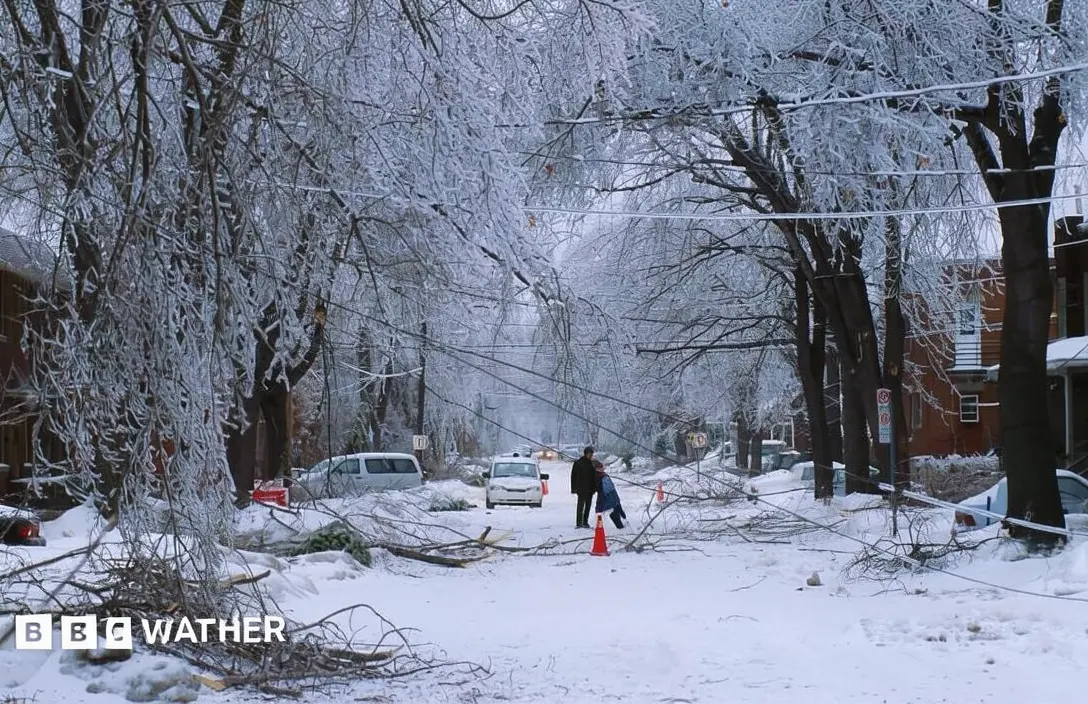
Historical data from the Great Ice Storm of 1998, which was partly blamed on El Niño, highlights the potential for severe weather disruptions. The storm caused widespread damage across northern New England, northern New York, and southern Canada, with ice accumulation reaching three inches in certain areas. This event underscores the potential for extreme weather impacts, particularly in regions influenced by El Niño conditions. [4]
Sources
Prepared with AI assistance from the cited sources.
The Cali Reporter newsletter
The stories worth your time.
California, the country, and what comes next. Join our free newsletter for reporting that keeps you informed.
More in World
- Former Hamas Bodyguard Convicted in UK Knife Attack
A former Hamas bodyguard, Mohammed Alfatih, has been found guilty of a knife attack on a bailiff outside his UK home, according to a report by the BBC.
- Woman Survives Near-Fatal Reaction to Unlicensed Weight-Loss Injection
A woman from Birkenhead narrowly avoided death after suffering severe hypoglycaemia from an unlicensed weight-loss injection, highlighting the dangers of black market drugs.
- US Air Force Responds to Drone Activity at UK Base
The US Air Force has confirmed it responded to suspected unauthorized drone activity at RAF Lakenheath in Suffolk, though no damage or injuries were reported. The incident has raised concerns about security at US…