Feline Patient Receives Complex Surgery for Pituitary Tumor
A 10-year-old cat from Hoboken, New Jersey, underwent a complex surgical procedure in Oregon to remove a pituitary tumor that caused severe insulin resistance.

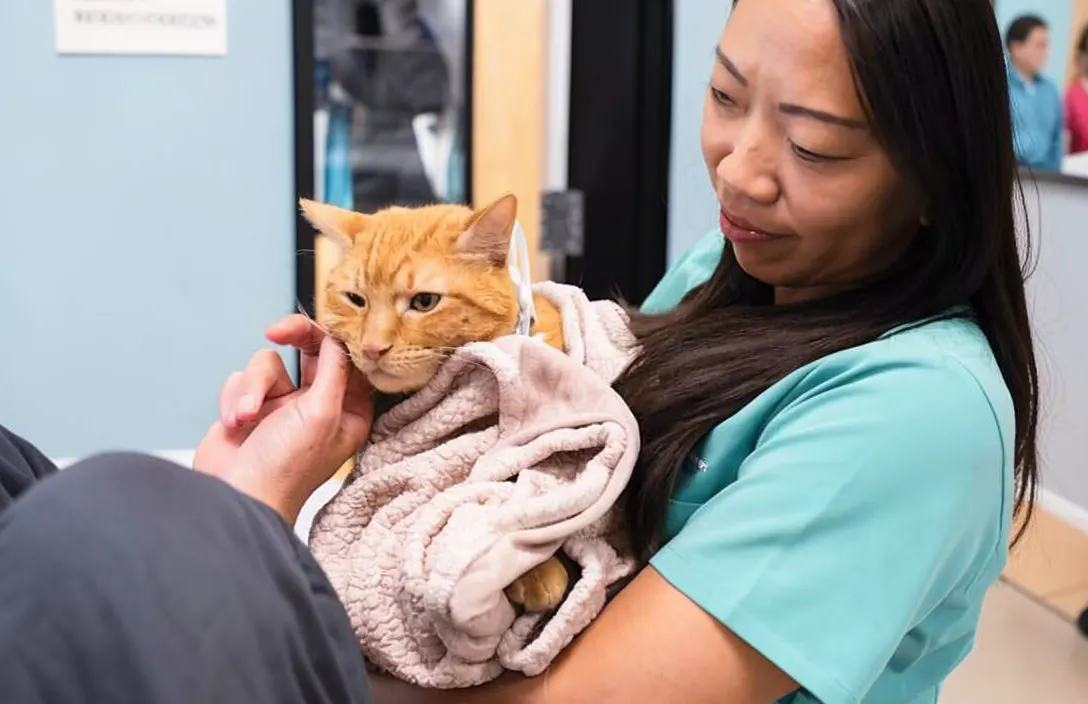

A 10-year-old cat named Mars from Hoboken, New Jersey, traveled to Bend, Oregon, for surgery to remove a growth hormone-secreting pituitary tumor that had caused severe insulin-resistant diabetes mellitus. Prior to the procedure, Mars required 20 units of insulin daily, which is significantly higher than the typical feline dose of 1 to 2 units. His condition, diagnosed as hypersomatotropism, involved a pituitary tumor secreting excess growth hormone, which could have led to irreversible damage to his heart, joints, and kidneys if left untreated (1). [1]
The veterinary team at the Veterinary Referral Center of Central Oregon (VRCCO) performed a transsphenoidal hypophysectomy, a procedure that involves reaching the pituitary gland through the soft palate. This complex surgery was facilitated by a custom 3D-printed surgical template and a 3D magnification camera system, allowing the team to remove the tumor through a 6 × 3-mm opening in the skull. The surgery required careful planning and rehearsal on feline cadavers to ensure precision and safety (1). [1]
The surgery was conducted at the Veterinary Referral Center of Central Oregon (VRCCO) in Bend, Oregon, after the cat, named Mars, traveled from Hoboken, New Jersey. Mars was a 10-year-old cat suffering from severe insulin-resistant diabetes mellitus due to a growth hormone-secreting pituitary tumor, which had caused his insulin requirement to escalate to 20 units per day, far exceeding the typical feline dose of 1 to 2 units. The tumor was diagnosed through testing and confirmed by MRI, revealing hypersomatotropism, a condition where a pituitary tumor secretes excess growth hormone. This condition posed a risk of irreversible damage to Mars' heart, joints, and kidneys if left untreated. The VRCCO team, led by Annie Chen-Allen, DACVIM (Neurology), performed a transsphenoidal hypophysectomy, a procedure that requires accessing the pituitary gland through the roof of the mouth, specifically through a 6 × 3-mm opening in the skull. This approach is complex and requires a high level of surgical precision due to the gland's location at the base of the brain, surrounded by major blood vessels. The surgery was facilitated by a custom 3D-printed surgical template developed by VRCCO CEO Mauricio Dujowich, along with a 3D magnification camera system, which allowed the team to remove the tumor in one piece. Prior to the surgery, the team rehearsed on feline cadavers to refine patient positioning, instrument placement, and team coordination. The procedure is noted for its high learning curve and historically high mortality rate, which made the successful outcome particularly significant. The tumor was described as small but firmly attached to Mars’ brain, requiring slow and careful dissection. After the surgery, Mars was closely monitored in the ICU, with staff checking on him every 5 minutes, and his electrolytes and hormones were managed by the critical care team. The case highlights the success of the VRCCO’s medical travel program, which assists families with logistics, including gathering medical records, scheduling appointments, arranging procedures, and providing travel and lodging resources. The program also offers telehealth consultations before and after surgery to support families traveling for specialized care. [1]
The surgery took place at the Veterinary Referral Center of Central Oregon (VRCCO) in Bend, Oregon. The cat, named Mars, originated from Hoboken, New Jersey, and traveled over 3,000 miles for the procedure. The veterinary team at VRCCO specializes in complex neurosurgical cases, including pituitary tumor removal in animals. The surgical approach used was a transsphenoidal hypophysectomy, which involves accessing the pituitary gland through the roof of the mouth, specifically through a 6 × 3-mm opening in the skull. This technique is highly specialized and requires precise surgical planning due to the gland’s location at the base of the brain and its proximity to major blood vessels. The procedure was performed using a custom 3D-printed surgical template developed by VRCCO CEO Mauricio Dujowich, which aided in accurate tumor removal. The surgery was conducted in a dedicated surgical suite equipped with a 3D magnification camera system to enhance visualization during the delicate procedure. The tumor was described as small but firmly attached to the brain, requiring meticulous dissection to avoid damage to surrounding structures. [1]
Advertisement
The case of Mars highlights the documented surgical limits and risks associated with transsphenoidal hypophysectomy in cats. According to a 2021 retrospective study conducted at the Royal Veterinary College in the UK, which analyzed 68 cats with hypersomatotropism and diabetes treated with this procedure, 15% of the cats died within four weeks of surgery, and 60% achieved diabetic remission. These figures underscore the high learning curve and risks involved in the surgery, which historically have been associated with high mortality rates. At VRCCO, the team has completed more than 30 pituitary surgeries together in dogs and cats, indicating a level of experience that is relatively rare in veterinary medicine. The team includes Annie Chen-Allen, DACVIM (Neurology), along with Tina Owen, DACVS-SA, and Linda Martin, DACVECC, who have collaborated on pituitary surgeries during their tenure at Washington State University. Before performing the surgery on Mars, the team rehearsed on feline cadavers to refine patient positioning, instrument placement, and team coordination. This preparation is a documented step taken to mitigate the risks associated with the procedure. Post-surgery, Mars was placed in the ICU, where staff monitored him every five minutes and managed his electrolytes and hormones. The hospital’s medical travel program, which was expanded in July 2026, helped coordinate logistics for Mars’ family, including arranging travel, lodging, and telehealth consultations before and after the procedure. [1]
Sources
Prepared with AI assistance from the cited sources.
The Cali Reporter newsletter
The stories worth your time.
California, the country, and what comes next. Join our free newsletter for reporting that keeps you informed.
More in Pets & Animals
- Toxoplasmosis in Dogs: New Ocular Manifestations and Diagnostic Challenges
A recent case series highlights the underrecognized role of Toxoplasma gondii in causing ocular inflammation in dogs, with findings that challenge previous assumptions about the disease's prevalence and presentation in…
- Regional Variations in Allergic Dermatitis Seasons
Allergic dermatitis in dogs is influenced by regional allergen patterns, with variations in allergy seasons across different parts of the country. This affects how veterinary care is managed and prepared for by general…
- Arizona Implements New Travel Rules for Pets Amid Screwworm Outbreak
Arizona has introduced new travel guidelines for dogs and cats as the state confirms six cases of New World screwworm, prompting stricter movement controls within and out of infested zones.