First Olive Ridley Nests Ever on U.S. West Coast Moved to Aquarium of the Pacific to Survive Upcoming Storms
Federal and local agencies relocate eggs from Huntington Beach and Seal Beach to protect against forecasted high tides.

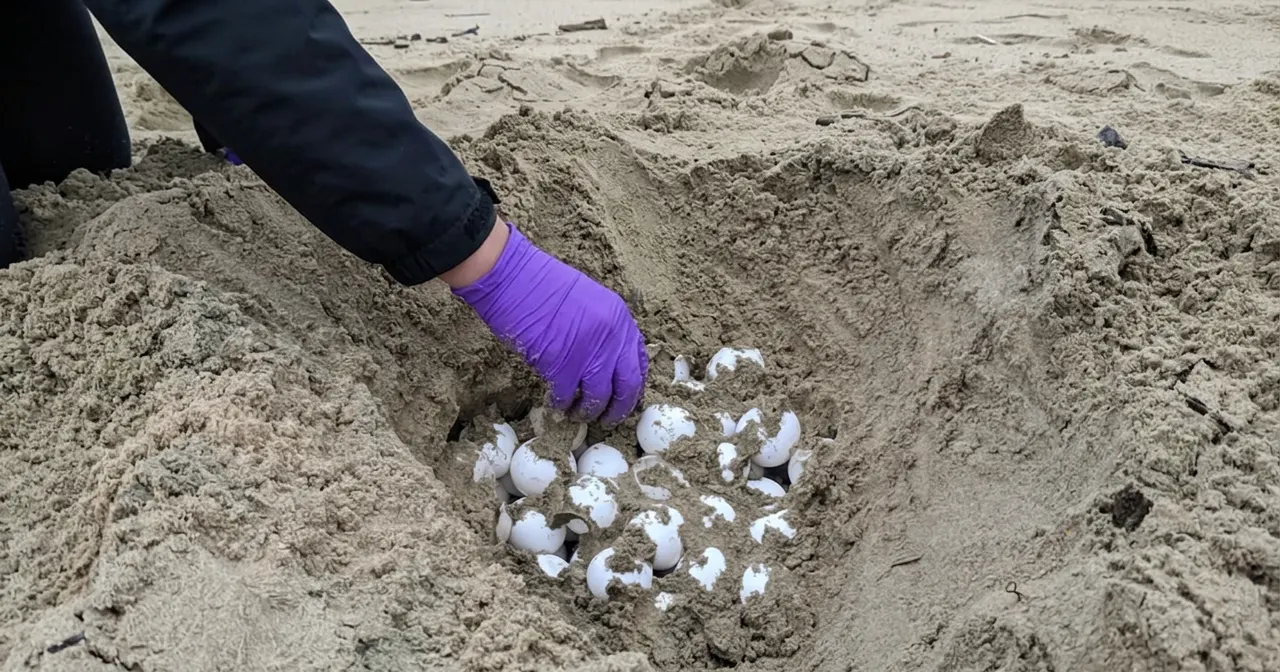

With high tides and perilous surf conditions forecast for the weekend, federal and local agencies monitoring sea turtle nests laid last week in Huntington Beach and Seal Beach made the difficult decision to relocate the eggs, according to a joint statement released on Friday. A team of biologists collected the olive ridley sea turtle eggs in early morning hours on Friday and transferred them to the Aquarium of the Pacific in Long Beach.
These nests represent a significant environmental development for the region as they are the first known naturally occurring sea turtle nests on the U.S. West Coast. The Olive Ridley is an olive-green, heart-shaped sea turtle listed as a threatened animal under the Endangered Species Act. These turtles normally inhabit tropical regions of the Pacific, Indian, and Atlantic oceans and typically nest along the coasts of Mexico, Nicaragua, Costa Rica, and Panama.
The Orange County locations where the nests appeared on September 16 in Seal Beach and September 19 in Huntington Beach are several hundred miles farther north than the turtles have ever been seen nesting before. Prior to last week, the farthest known northern nesting ground was in the Mexican state of Baja California Sur. The Olive Ridleys chose two specific locations to deposit their eggs. The nest in Huntington Beach was situated near a section of beach that will be blocked off from October 2 to 4 for the Pacific Airshow.
Biologists moved the eggs to ensure their survival during the anticipated weather events. The nest in Seal Beach was located near the Surfside community and adjacent to an area where sand berms are planned for the coming winter storms. The California Coastal Commission, which granted the air show a five-year operating permit last year, reached out to the cities and organizers to discuss the nests before the decision was made to remove the eggs.
Advertisement
We are going to work with all parties concerned to keep the nest as safe as we can, Sarah Christie, the legislative director at the California Coastal Commission, stated on Thursday. She added that if there are super high storm tides, the berming and the air show may not be the biggest threat. The eggs will remain at the aquarium for the remainder of their 45-to-60-day incubation period. If viable, the hatchlings are expected to emerge around the first week of November.
First reported by LA Times: California.
The Cali Reporter newsletter
The stories worth your time.
California, the country, and what comes next. Join our free newsletter for reporting that keeps you informed.
More in California
- Elderly Man Robbed in Costco Parking Lot, Four Arrested
A 91-year-old man reported a theft of a ring during an interaction at a Costco in Modesto, leading to the arrest of four individuals.
- Federal Court Halts Closure of East Potomac Park
A federal court has issued a temporary restraining order to prevent the Trump-Vance administration from closing East Potomac Park as part of a plan to convert the area into an exclusive golf course.
- CMS Announces Optional Six-Month Delay for Medicaid Work Requirements
The Centers for Medicare and Medicaid Services (CMS) has announced an optional six-month delay for states implementing Medicaid work requirements, according to a report by KFF.