Gilroy Homelessness Panel Returns a Concept, Not a Blueprint
Destination: Home provided $54,557 in funding to Gilroy to pay for Homebase and six meetings; the panel’s sole public recommendation was a managed site, while the council set a Dec. 15 deadline for Camp Hope.

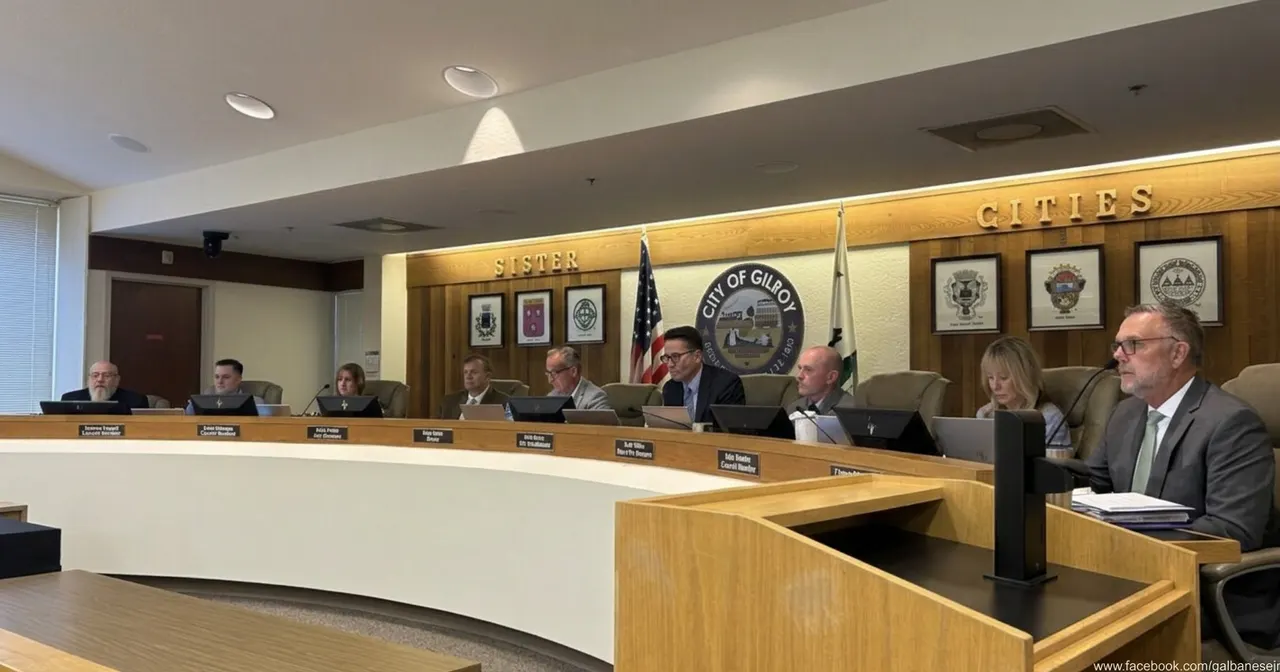
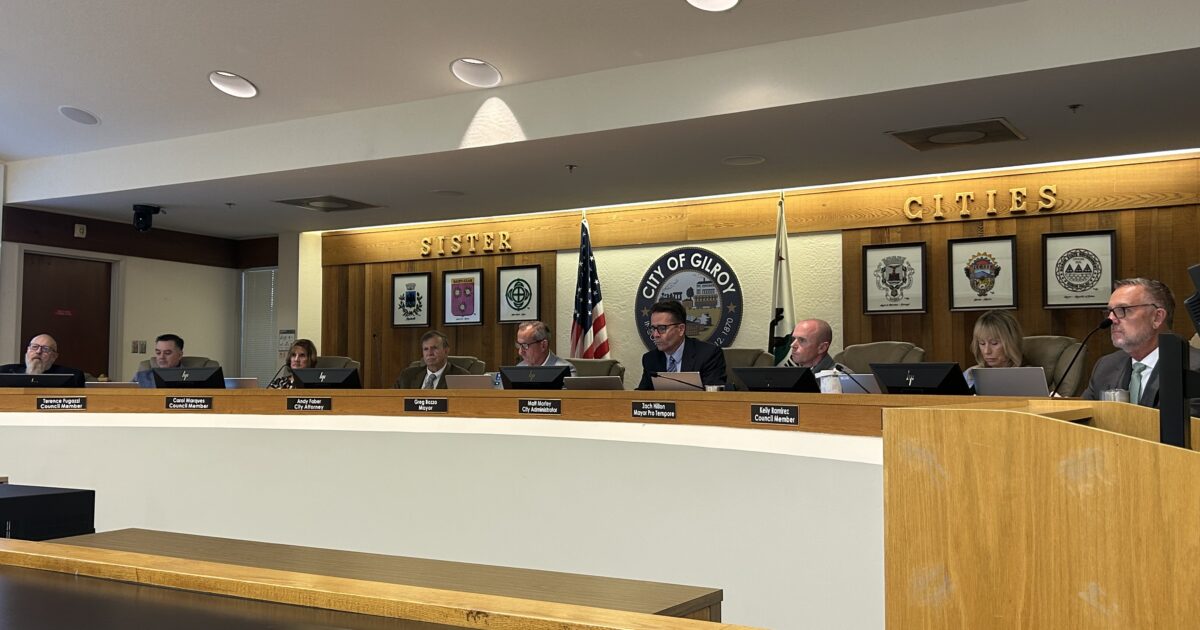
Gilroy’s ad hoc committee on homelessness returned to the City Council on Nov. 2 after six months of work without a detailed plan, according to San José Spotlight. Its sole public recommendation was to create a stable, managed site for unhoused residents. The source reported that the proposal did not identify a location, describe how the site would be built, estimate a cost or name a funding source. [1]
The outlet’s account does not say whether those details exist in a separate document or were discussed outside the public session. It reports only that the recommendation brought before the council lacked those specifics. The source does not supply a draft plan, budget table or site list, so the public record it describes is incomplete on the operational questions. [1]
Councilmember Terence Fugazzi told the outlet he was disappointed by the shortage of substantial facts and recommendations in the report. He said the committee appeared to be seeking direction from the council rather than supplying it, and he summarized the result with the phrase “We like Tulare.” Fugazzi also noted that the six meetings cost roughly $9,000 each, a figure he used in criticizing the report’s level of detail. [1]
Destination: Home provided $54,557 in funding to Gilroy to pay Homebase, a nonprofit adviser that helps cities develop homelessness plans, according to the source. The outlet reports that the funds covered costs for six meetings. The source does not break down how much went to facilitation, materials or other costs, nor does it establish that the committee itself spent the exact sum. [1]
Advertisement
The council approved the Homebase consulting proposal in April, and the ten-member panel formed in May, the outlet reported. Homebase was to prepare agendas and meeting materials in consultation with Mayor Greg Bozzo, communicate with members, run discussions, take notes and assist with follow-up. Its assignment also included setting down the panel’s priorities and any steps toward implementation that emerged. [1]
Bozzo chaired the panel. The other members were Gilroy Councilmembers Kelly Ramirez and Dion Bracco; Morgan Hill Councilmember Soraida Iwanaga; Chris Vanni and Ann Marie McCauley, identified as business and property owners; Vanessa Ashford and Vicky Martin, identified as service providers and advocates; and Aubrey Tasby and TJ Napihaa, who represented residents with lived experience. The source does not provide attendance records or meeting minutes. [1]
Chelsea Muller, a spokesperson for Destination: Home, said the organization recognized the value of bringing a diverse group together on the homelessness crisis and was glad to support the city’s work with Homebase. She described the aim as helping the mayor and city leadership explore new strategies inclusively, with a technical convener, local agencies and residents who had experienced homelessness involved. The source does not report performance benchmarks or public reporting requirements for the funding. Homebase did not answer the outlet’s request for comment. [1]
Rachelle Bedell, a city spokesperson, described Homebase as supplying technical help and running the sessions while members reviewed Gilroy’s approach to homelessness, heard from people who had experienced it and examined methods used in other California communities. That process led to the managed-site recommendation, according to the outlet. The source does not report that the committee produced site options, cost ranges or funding mechanisms. [1]
Advertisement
The outlet’s account does not include the panel’s written priorities, the agendas Homebase prepared or any minutes. That absence limits independent verification of how members weighed the Tulare and San Jose examples, what service providers told them or how residents with lived experience shaped the recommendation. It does not establish that those materials do not exist; it means the public record described in the source is incomplete. [1]
The source also does not describe how the committee’s priorities were recorded or whether they were transmitted to the council in writing. It reports that Homebase was tasked with documenting priorities and implementation steps, but it does not show those documents. That gap matters because the council was asked to act on a recommendation whose supporting record is not described in the outlet’s account. [1]
Without those records, an accountability question remains about how six sessions produced a general concept rather than an actionable proposal. That question is separate from the merits of a managed site. It concerns the trail from the funding and facilitation to a public recommendation that the council could evaluate, fund and site. Answering it would require the missing materials, not assumptions about what occurred beyond what the outlet reported. [1]
The panel’s lack of a detailed proposal coincided with a council decision on Camp Hope. Councilmembers voted 4-3 to sweep the encampment by Dec. 15 with the understanding that residents would be offered shelter and services, the outlet reported. Bozzo, Ramirez and Bracco voted against the sweep. The source does not specify what shelter or services would be offered, where they would be located or whether capacity exists for the camp’s residents. [1]
Advertisement
Roughly 25 people living at Camp Hope, near the Sixth Street overpass along U.S. Highway 101, have self-managed the camp for the past year, with occasional city-funded cleanups, according to the source. Councilmembers at the Nov. 2 meeting argued that the encampment should receive the same treatment as other unhoused residents in Gilroy. A 2025 point-in-time tally, described as the latest, estimated the city’s homeless population at 959 people. [1]
Vanessa Ashford, an advocate for Camp Hope, told the outlet that the sweep decision appears counterproductive to the committee’s findings, though she remains optimistic that the panel’s work can produce positive results. She said she worried during the panel’s meetings that the camp could be lost absent a firm plan to preserve it, and that residents need somewhere to go. She also said there are no perfect solutions. [1]
McCauley, who runs Lazy Susan Designs and serves on Gilroy’s Open Government Commission, expressed confidence that the panel can produce an objective local plan with Gilroy-specific demographic information and solutions that do not add to fear. She said scrutiny from critical councilmembers is a chance to improve the proposals, but that the work should not be rushed and should include revising city policy that she described as currently limited to abatement. [1]
Bozzo said he welcomed the council’s guidance and the chance to keep developing the plan. He said his hope is that the work will help Gilroy assist unhoused residents while addressing the broader community’s needs and concerns. He described a desired Gilroy where residents feel secure, cared for and linked to one another. The source reported his comments as a statement about continuing work, not as a commitment to specific measures. [1]
Advertisement
Muller’s comments and Bedell’s account describe the panel’s process as inclusive and technically assisted. Fugazzi’s comments describe the result as short on actionable detail. Ashford’s comments connect the missing proposal to the immediate risk facing Camp Hope. Those perspectives do not resolve the central question: whether the managed-site recommendation will become a proposal with a site, a cost and a funding source. [1]
The immediate implication is procedural and practical. The council has set a Dec. 15 sweep deadline for Camp Hope while the committee’s only public recommendation remains a general concept. The source does not say whether the city will produce shelter offers before the deadline, how offers would be tracked or what happens if residents decline. The source also does not report a council vote on shelter capacity or a plan for handling encampment residents after Dec. 15. Those are open questions, not established outcomes. [1]
A second question is whether the committee will return with the details the recommendation lacked: a specific site, a cost estimate and a funding source. The source does not report a council directive to staff to produce those details, nor does it report a timeline for a revised proposal. It also does not say whether the panel will continue to seek direction from the council or bring its own implementation steps. [1]
A third question concerns city policy. McCauley said the policy should be revised beyond abatement, according to the outlet. The source does not describe the current policy’s text, the changes she has in mind or whether the council has scheduled a policy discussion. How Gilroy would treat Camp Hope relative to the broader homeless population also remains unclear beyond the council’s stated rationale for the sweep vote. [1]
A fourth question is what the public can verify. The source does not report a committee work product beyond the recommendation described, and it does not say whether the city will publish the agendas, notes or priorities that Homebase was assigned to prepare. Without those materials, the council’s evaluation and the public’s understanding depend on what is presented at future meetings. [1]
Watch whether the committee returns to the council with a proposal that names a site, estimates costs and identifies funding. Watch also whether the council directs staff to develop those details or leaves the managed-site recommendation as a concept. These are scenarios to track, not predictions. The source does not report that any such proposal is scheduled, and it does not report a scheduled date for the committee’s next council appearance. [1]
Watch the Dec. 15 Camp Hope deadline. Questions include whether the sweep proceeds, what shelter and services are offered to the roughly 25 residents and whether the city’s actions match the council’s stated understanding that residents would receive alternatives. The source does not say what will happen if residents decline offers or if capacity is unavailable. [1]
Watch whether Gilroy revises its homelessness policy beyond abatement, as McCauley suggested, and whether Destination: Home or Homebase make further public statements. The source reports that Homebase did not respond to the outlet’s inquiry and does not report any later Destination: Home statement beyond Muller’s comments. The source does not report a scheduled follow-up from the committee, Destination: Home or Homebase. The source also does not report whether the council will revisit the managed-site concept or request a new committee report. [1]
Sources
Prepared with AI assistance from the cited sources.
The Cali Reporter newsletter
The stories worth your time.
California, the country, and what comes next. Join our free newsletter for reporting that keeps you informed.
More in San Jose
- Proposition 1 Bond Measure Passes, Aiding Affordable Housing in Silicon Valley
Proposition 1, an affordable housing bond measure approved by state voters on Nov. 3, 2026, will enable more below-market rate housing to be constructed, offering relief to many in need.
- Nvidia CEO Resigns Amid Controversy, Stock Plummets
Nvidia announced the resignation of its CEO, Jensen Huang, following revelations about an extramarital relationship, triggering a sharp decline in the company's stock price.
- San José Council Takes Up Winter Flood Preparations
The November 10 City Council agenda included a flood preparedness report and a proposed local emergency resolution.