National Ground Stop Ends After Four Hours, but Technical Cause Remains Unresolved
A nationwide halt to U.S. departures ended after roughly four hours. Transportation Secretary Sean Duffy blamed aging equipment, Homeland Security Secretary Markwayne Mullin said there was no evidence of a cyberattack, and Sen. Richard Blumenthal sought a thorough investigation.

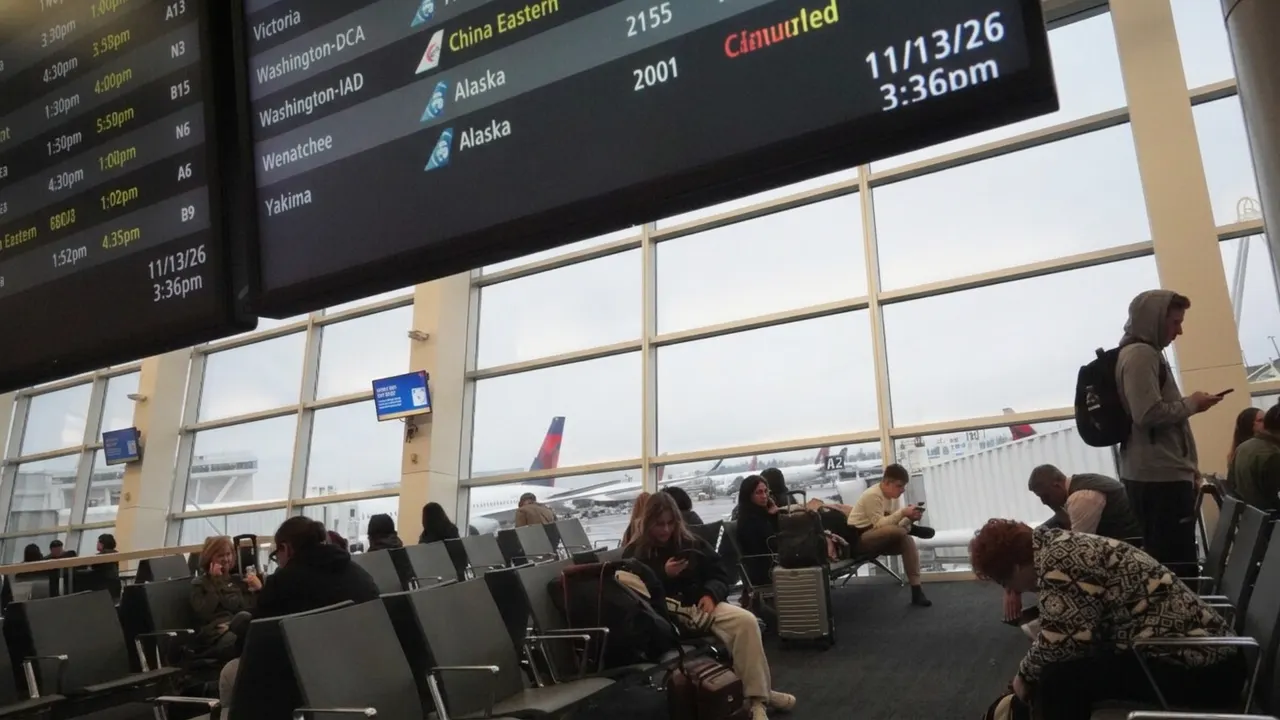

The Federal Aviation Administration lifted a nationwide ground stop Friday after roughly four hours, according to the report. The order had grounded thousands of flights at U.S. airports and ranked among the largest disruptions to U.S. air travel since the Sept. 11, 2001, attacks. The FAA announced the stop had ended, but the report does not say what technical details the agency released with that announcement. [1]
At a Friday night news conference, Transportation Secretary Sean Duffy said air traffic control facilities had experienced intermittent outages of radar and communications systems beginning earlier in the afternoon. He blamed outdated technology, describing old switches, old routers and 1980s copper lines. Duffy said the system went down in many places and became overloaded. When reporters pressed him on why those systems would be overwhelmed on an otherwise normal travel day, the report says he did not have a ready answer. [1]
Homeland Security Secretary Markwayne Mullin, appearing with Duffy at the White House briefing room, said there was no evidence the issue was an attack. “We have seen zero evidence this is a cyber attack,” he said, according to the report. The FAA said the problem affected Air Route Traffic Control Centers, the regional facilities that handle high-altitude traffic. FAA leaders did not brief the media at that news conference and did not provide further detail there on the communication outages that led to the ground stop. [1]
By 9 p.m. ET Friday, FlightAware counted more than 8,000 delayed flights and 7,000 cancellations in the United States, the report says. The previous day had brought nearly 7,000 delays. Travelers faced confusion. Regina Harling, waiting at Dallas Fort Worth International Airport, said she had waited hours past her scheduled departure before learning of the nationwide grounding from news on her phone, while a sign still said boarding in 16 minutes; she was trying to reach San Diego for a family emergency. Giliann Karon, aboard a plane at Chicago O’Hare International Airport when the order came, reacted with resignation after a weather delay in New York City the day before. [1]
Advertisement
The report says flights would resume but would take time to clear, according to Duffy. It does not provide a final tally of delays or cancellations, a technical sequence for the radar and communications failures, or a list of affected facilities. Its figures are a snapshot as of 9 p.m. ET, not a completed accounting. [1]
The scale of the halt is central to its significance. The report describes it as only the second nationwide ground stop since Sept. 11, 2001, and says it grounded flights at all U.S. airports. Yet the public explanation remained broad. Duffy characterized the infrastructure as old and overloaded, but the account did not detail which components failed, how failures spread, or why a routine travel day produced overload. [1]
The report locates the failures at Air Route Traffic Control Centers, while the ground stop applied across U.S. airports. That distinction matters analytically: a nationwide operational order does not by itself show that every facility or every layer of the system failed in the same way. Duffy described intermittent outages and said the system went down everywhere, but the report does not provide a facility list or a sequence. The gap between a nationwide order and a nationwide equipment failure remains an open question. [1]
Official statements narrowed some theories without resolving the cause. Mullin said there was no evidence of an attack. Air Space Intelligence, which makes the FAA’s new AI-enhanced SMART tool, rejected speculation that its product or its integration with the FAA and air traffic control caused the disruption. Those denials address cyberattack and modernization speculation, but they do not identify the failed radar or communications equipment. [1]
Advertisement
Political attention followed quickly. Sen. Richard Blumenthal, D-Conn., released a statement late Friday calling for a prompt, penetrating investigation. He called a communication outage of that size highly alarming and a clear danger to national security and safe, convenient travel close to the holidays. He said the Department of Transportation owed Americans credible, accurate action and factual disclosure. The report does not say what investigation has begun or what it has found. [1]
Timing added to the disruption. The halt came near the holidays, when travelers are already familiar with delays and cancellations, the report notes. Duffy said flights would resume but that clearing the backlog would take time. The report’s snapshot of more than 8,000 delays and 7,000 cancellations as of 9 p.m. ET is not a final tally, and it does not establish how long recovery took. [1]
The report places the episode in rare company. It says the only comparable nationwide stop since Sept. 11, 2001, came in 2023, when all U.S. airports were shut because of an outage in the NOTAM system, which alerts pilots and airports to real-time hazards. That outage also prompted fears of a cyberattack. [1]
The 2023 precedent ended with a technical finding: the FAA later determined that contract workers had inadvertently deleted critical files, according to the report. The report does not describe a similar finding for Friday’s event. Officials said there was no evidence of a cyberattack, but they did not provide a detailed account of why radar and communications systems failed or became overloaded. The report also separates the current outage from the SMART rollout because the tool’s maker denied any connection. [1]
Advertisement
The report uses 2023 as the nearest comparison point, not as proof of a shared cause. It states that the earlier outage was traced to deleted files; it does not make that claim about Friday’s failures. The current record instead contains official denials of a cyberattack and of a SMART connection, alongside Duffy’s general description of aging equipment and overload. [1]
The report supports several implications without establishing a complete cause. A four-hour national stop shows how a broad aviation halt can ripple through airports and traveler plans. It also shows that official assurances—no evidence of attack, no SMART connection—can coexist with an incomplete technical explanation. Denying one cause is not the same as identifying the cause. [1]
Basic questions remain. Officials did not say which facilities had outages, which radar or communications components failed, how failures spread across regional centers, or how many facilities were affected. Duffy said the system failed in many places and became overloaded, but when asked why that happened on an otherwise normal travel day, he did not have a ready answer. The FAA did not provide further detail at the White House briefing. [1]
The decision process and recovery also remain opaque. The report does not say how the nationwide ground stop was chosen, what alternatives were considered, how many flights were ultimately affected, or whether equipment remained degraded after the order was lifted. It does not establish whether aging equipment alone caused the failure or whether operational load, configuration, or another factor contributed. Nor does it provide a final delay and cancellation count beyond the 9 p.m. ET figure. [1]
Advertisement
The cyberattack question is not fully closed by the public record. Mullin said there was zero evidence of an attack, but the report does not describe a completed investigation. Blumenthal’s demand for a thorough inquiry is the only stated oversight request in the report. Whether legislators will obtain more evidence is an open question, as is whether the FAA has traced the intermittent outages to one point of failure or to multiple facilities. [1]
The report’s account leaves a gap between official assurances and technical explanation. Mullin’s statement and the SMART maker’s denial narrow speculation, but they do not identify the failed components, the sequence of outages, or the reason the system became overloaded on a normal travel day. Duffy’s description of old switches, routers and 1980s copper lines is a characterization of infrastructure, not a finding about the specific cause. Ending the stop was an operational step, not a full explanation. [1]
Questions to watch include whether the FAA or the Department of Transportation publishes a facility-by-facility timeline, identifies specific equipment, distinguishes radar failures from communications failures, and explains the overload. Another open question is whether either agency offers interim fixes or says whether any equipment remained degraded after the stop. The report does not say what form an investigation will take or when findings might appear. [1]
Watch whether the factual account Blumenthal demanded materializes and whether legislators receive documents or briefings. Whether the FAA explains why the failures occurred on a routine travel day is also unresolved. A scenario in which the public receives only a general reference to old equipment would leave the central technical questions unanswered; a scenario in which officials publish component-level findings would address them. Neither outcome is established by the report. [1]
Travel recovery is another marker. The report says flights would resume but clearing the backlog would take time, and the delay and cancellation figures are a snapshot. Possible consequences near the holidays include lingering cancellations and rebooking pressure, but those are scenarios, not established outcomes. The report does not give a final tally or recovery timeline. [1]
The modernization debate is a further question. The FAA has begun rolling out the AI-enhanced SMART system as part of an ambitious overhaul of the nation’s air traffic control system. Whether officials can explain how old and new systems are integrated, whether the outage changes the pace or scope of upgrades, and whether the public receives a fuller account than Friday night’s are open questions. [1]
For now, the confirmed record is narrow: a roughly four-hour nationwide stop, intermittent radar and communications outages, Duffy’s blame on old equipment, a Homeland Security statement of no evidence of a cyberattack, and one senator’s call for investigation. The precise cause, full operational impact, and consequences for modernization remain to be established. [1]
Sources
Prepared with AI assistance from the cited sources.
The Cali Reporter newsletter
The stories worth your time.
California, the country, and what comes next. Join our free newsletter for reporting that keeps you informed.
More in San Diego
- New Mexico's Universal Childcare Program Faces Capacity Challenges
New Mexico's universal childcare initiative, the first of its kind in the U.S., has been transformative for many families but is grappling with significant capacity constraints that leave thousands on waitlists.
- GOP Officials Push to Revive Trump's Mail Voting Restrictions for 2028 Election
Republican state attorneys general are appealing a court order that blocked the U.S. Postal Service from implementing Trump-era mail voting restrictions for the 2028 election.
- SpaceX Successfully Catches Starship in Historic Achievement
SpaceX's Starship made history on Saturday with the first-ever midair capture of a spacecraft returning from space, marking a significant step toward full reusability for future lunar and Martian missions.