Ornaments Outpace Weapons in a Model-Backed Comparison, With Conditions Attached
A study pairing simulations with 531 species finds courtship traits changing faster overall, while the strongest cross-species result depends on model choice and body-size adjustment.

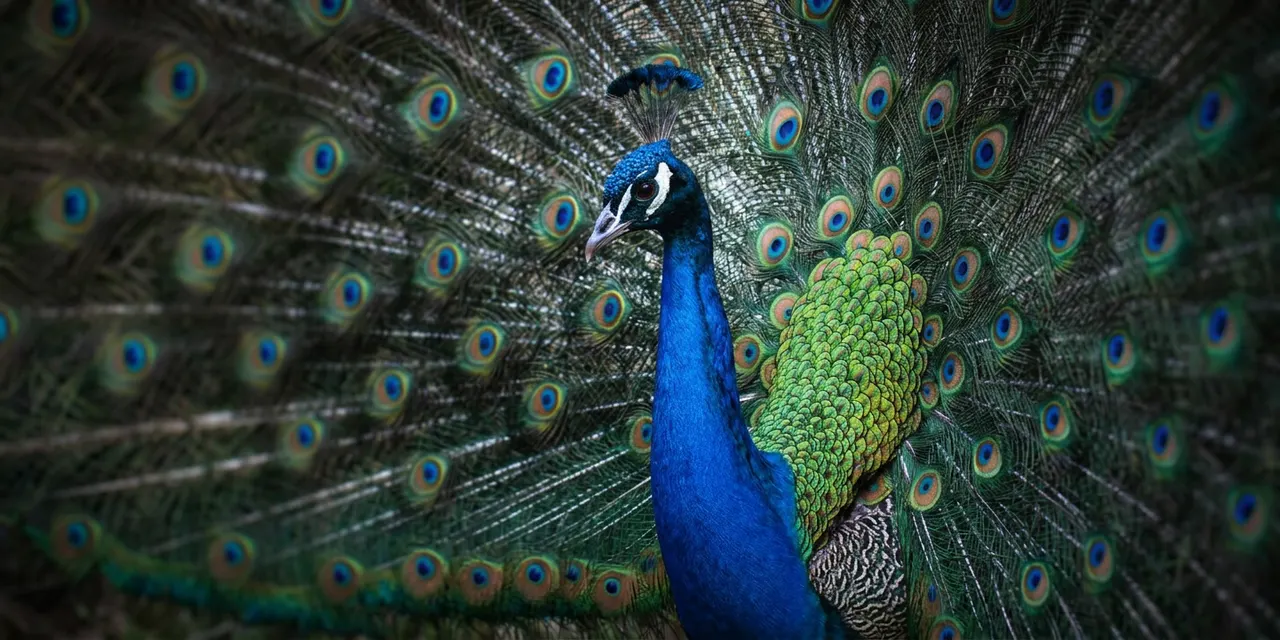
A study published in Proceedings of the Royal Society B combines a mathematical model with comparative measurements from 10 animal groups and 531 species. The authors report that ornaments—traits shaped by mate choice—changed faster overall than weapons used in same-sex combat. In their account, much of that gap comes from mating preferences that shift across generations without being tightly bound to survival. Those moving tastes give ornaments a changing evolutionary target, while the physical demands of fighting keep combat structures closer to a steadier pace. [1]
William L. Allen of Swansea University, one of the paper’s senior authors, told PsyPost that the project grew from an earlier paper by Erin McCullough, Christine Miller and Doug Emlen. That work proposed that weapons and ornaments follow fundamentally different evolutionary dynamics and predicted that weapons should evolve more slowly, Allen said. He added that the prediction had not been tested directly. The new team therefore built a framework for comparing the two rates and then checked its central prediction against published trait data and time-calibrated family trees. [1]
The paper places the question within sexual selection, which works through two broad channels. Same-sex competition, most often males fighting or intimidating rivals, favors weapons that can overpower opponents or inflict injury. Mate choice, most often females selecting among partners, favors ornaments that appeal to the senses. Traits shaped by sexual selection often change faster than ordinary body parts, but biologists have disagreed about whether ornaments or weapons should lead. The new study treats that disagreement as a testable question about rates and mechanisms rather than as a simple contrast between flashy and combative features. [1]
For the theoretical side, the researchers extended a 1981 coevolution model to track three inherited traits: male ornament size, male weapon size and the strength of female preference for the ornament. The setup assumed an effective population size of 1,000 and gave each trait a baseline level suited to everyday survival. Growing an oversized ornament or weapon, or paying the costs of choosiness, reduced survival fitness. A larger weapon always improved a male’s mating prospects, whereas a larger ornament helped or hurt depending on the population’s average female preference in that generation. The model also included genetic drift, the chance shifts in gene frequencies caused by finite populations. [1]
Advertisement
Across many simulated conditions, ornaments evolved faster than weapons. Weapons stayed near their long-run balance because their competitive payoff did not depend on female taste. Ornaments fluctuated more widely when choosiness was cheap and drift could move average preferences. Fixing female preferences slowed ornament evolution to the weapons’ pace. Strong genetic links between preference and ornament sped change through mutual feedback, but drifting preferences alone were enough to give ornaments an edge even without strong coupling. In supplementary runs with moderate links, ornaments still outpaced weapons, while larger populations weakened drift and reduced fluctuations across all traits. [1]
The model did not make ornaments faster in every scenario. Weapons pulled ahead when strong female preferences carried a heavy survival cost that kept choosiness from drifting, or when males could produce weapons much more cheaply than ornaments. Those reversals mark boundary conditions rather than the main result. They show that the predicted ranking depends on costs and on how freely preferences move, and the paper reports them as exceptions within a broad pattern. [1]
For the empirical side, the team assembled published measurements and time-calibrated trees. The final sample contained 531 unique species across 10 datasets, each covering 17 to 103 species. Many animal structures serve more than one purpose, so the researchers restricted the sample to groups where earlier work indicated a trait mainly functioned as a weapon or as an ornament. Weapon traits were used in same-sex competition, could cause physical harm and had not been shown to sway female choice. Ornament traits were continuous features documented as affecting mate choice but not injuring rivals. Fiddler crab males’ outsized claws illustrate the mixed-function structures that the filter excluded. [1]
The comparisons formed five matched pairs. Leg-spine length in leaf-footed bugs was set against eyestalk span in stalk-eyed flies. Bite force in anole lizards was paired with the throat bone supporting colorful fans in agamid lizards. Leg spur length was compared with neck-feather color in landfowl. Tusk length in even-toed hoofed mammals was matched with vocal pitch in carnivorans, and canine length was matched with vocal pitch in primates. Each weapon-bearing group was paired with the closest available ornament-bearing relative to account for broader biological differences such as generation time. [1]
Advertisement
After standardizing measurements, the team applied evolutionary regressions to strip out overall body size and also ran analyses without that adjustment. They compared two models of change along the trees: Brownian motion, an unconstrained random walk, and an Ornstein-Uhlenbeck process that adds a stabilizing pull toward an optimum. The stabilizing model fit better for five groups, performed similarly for four and trailed only for anole bite force. The authors treated it as the better-supported framework for the pooled estimate. [1]
With body size removed, four of the five pairings put ornaments ahead of weapons under both models. The insect comparison was the exception, with leaf-footed bug leg spines outpacing stalk-eyed fly eyespans. Pooling all five pairs under the better-supported stabilizing model gave an estimated rate of 0.129 for ornaments and 0.064 for weapons, roughly a twofold difference. Rates still ranged from 0.02 to 0.19 across the 10 datasets under that model. The estimated strength of the stabilizing pull did not differ significantly between trait types, which the authors read as evidence that weapons do not necessarily face tighter selection against poor forms. [1]
The pooled advantage was specification-dependent. Under Brownian motion, or when body size was not adjusted under either model, the contrast between ornaments and weapons failed to reach statistical significance. The authors argue that overall body size is not expected to evolve at different speeds in weapon-bearing and ornament-bearing animals, so leaving it in may dilute the sexual-trait contrast. They also acknowledge that the regression-residual method used to remove body size can introduce statistical bias into rate estimates. That caveat does not erase the adjusted result, but it narrows how firmly the cross-species pattern can be stated. [1]
A further interpretive limit concerns female preference itself. The researchers could not measure choosiness directly across the 531 species. Shifts in the optimal ornament size produced by drifting preferences may therefore be captured by the larger fluctuation rate the model estimates for ornaments. That does not invalidate the comparative pattern, but it means the mechanism is inferred through the model rather than observed directly in the cross-species data. The authors present this as a caveat on mechanism, not as a reason to discard the comparative result. [1]
Advertisement
The paper situates the result within a long debate. Sexual selection can favor weapons including tusks, spurs, leg spines and oversized canine teeth, and can favor ornaments such as bright feathers, specialized calls, throat fans and elongated eyestalks. Building on Ronald Fisher’s idea, a 1981 modeling study showed that genetic associations between preference and ornament can trigger rapid, self-reinforcing bursts. A 2019 primate comparison, which supplied part of the canine dataset reanalyzed in the new work, found that more elaborate ornaments went with smaller testes relative to body size, while larger canine weapons went with larger testes. [1]
Allen told PsyPost that the paper shows evolution acting differently on the two main categories of sexually selected traits and that this affects their rate of change. He credited the dual approach with exposing mechanisms that either method by itself would struggle to isolate. In his view, such models can help researchers understand past and present animal diversity and anticipate future change. That is an attributed forecast, not a result demonstrated by the study. Allen also said the theory generates a prediction and the comparative analysis asks whether that prediction appears across real animal groups. [1]
Several limitations remain open. Focusing only on traits with a primary weapon or ornament function excluded structures that serve one or more of male combat, female attraction, or predator defense, so the pace of multipurpose traits is unresolved. Two matched comparisons also span very deep time: the lizard families split about 146 million years ago, and the insect lineages’ ancestors diverged about 351 million years ago. Differences in population size or diversification rate may have affected those comparisons and could have contributed to the insect reversal. The simulation, meanwhile, tracked one ornament and one weapon in a well-mixed population with fixed genetic variation and no mechanical model of fighting. It also did not represent local mate availability or the possibility that a trait disappears entirely. [1]
The authors list possible extensions rather than conclusions. Future work could add multiple courtship signals, realistic combat biomechanics, local mate availability and episodes in which traits are lost. Allen said the team wants to understand why sexually selected traits evolve at different rates in different groups and how ecological and behavioral factors shape those dynamics. The authors frame these as directions that could shed further light, not as tests already completed. Whether such extensions would preserve, shrink or reverse the reported gap is not established by this paper; what to watch next is follow-up testing of the authors’ stated directions, not a guaranteed outcome. [1]
Advertisement
The Cali Reporter newsletter
The stories worth your time.
California, the country, and what comes next. Join our free newsletter for reporting that keeps you informed.
More in Relationships
- Family Relationships May Influence Well-Being of Poor Taiwanese Adolescents
A study of Taiwanese adolescents in poverty suggests that family relationships may play a key role in explaining the link between material deprivation and psychological distress, as well as substance use.
- Aggressive Personality Traits and Jealousy in Romantic Relationships
A new study explores how aggressive personality traits and specific love styles contribute to jealousy in romantic relationships.
- Early Brain Differences in Dyslexia Linked to Visual Processing Before Formal Reading
A longitudinal study published in Developmental Cognitive Neuroscience reveals that children who later develop dyslexia already show distinct neural responses to written words in kindergarten, before formal reading…