Personalized Therapies for IBD May Target Specific Harmful Gut Bacteria
A study led by Dr. Lukas Mager and Prof. Kathy McCoy has identified two gut bacteria that promote inflammation in inflammatory bowel disease, opening the door for personalized treatments.

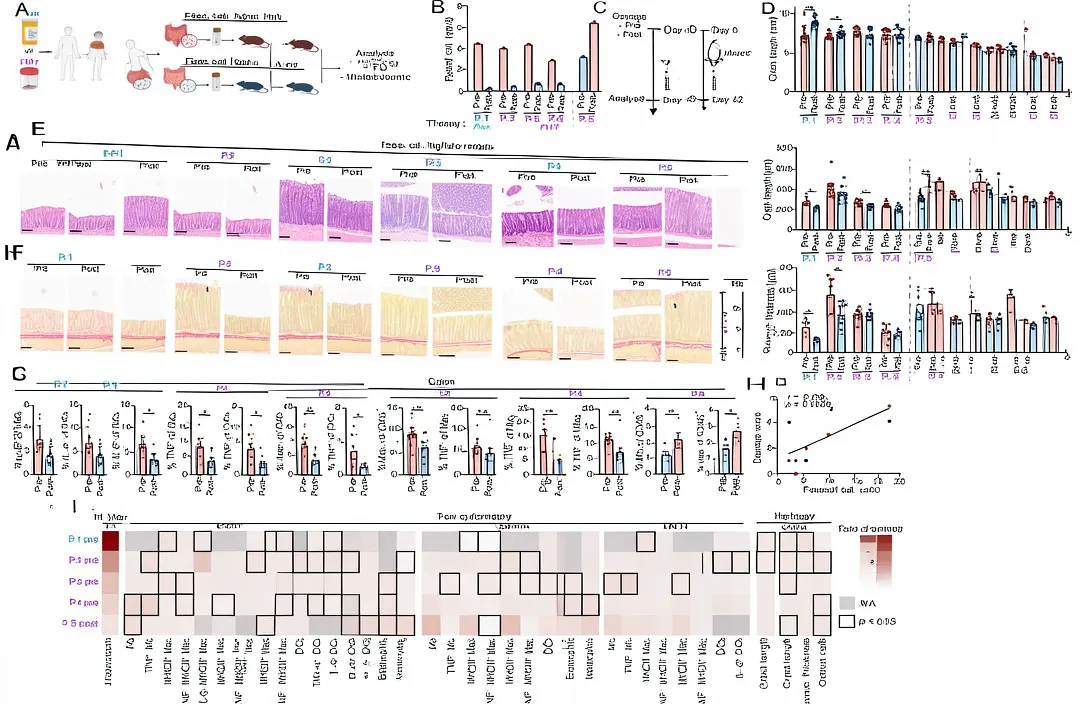

Researchers have identified two bacterial species, Sarcina perfringens and Hathewaya massiliensis, that contribute to intestinal inflammation in individuals with inflammatory bowel disease (IBD). These findings, published in the journal Gut, suggest that these bacteria activate the innate immune system and exacerbate inflammation. The study involved comparing stool samples from IBD patients before and after treatments such as antibiotics or fecal microbiota transplantation. By transferring gut microorganisms into germ-free mice, the team was able to assess the inflammatory effects of different bacterial species. This approach enabled the identification of bacteria that specifically contribute to inflammation in individual patients (source ID: 1). [1]
Sarcina perfringens was found at elevated levels in approximately 25% to 30% of IBD patients, while Hathewaya massiliensis was detected at elevated levels in around 5%. These bacteria were shown to impair the function of intestinal epithelial cells and promote inflammation through immune responses. The research team used intestinal organoids—miniature tissue models grown from human cells—to further validate the inflammatory effects of these bacteria. This evidence supports the potential for targeting these specific bacteria in personalized therapies for IBD (source ID: 1). [1]
The study also identified five compounds that selectively inhibit the growth of Sarcina perfringens and Hathewaya massiliensis without significantly affecting other gut bacteria. Oxolinic acid, in particular, showed efficacy comparable to the broad-spectrum antibiotic metronidazole in reducing inflammation in a mouse model. However, unlike metronidazole, oxolinic acid had minimal impact on the overall gut microbiota. This suggests that targeted inhibition of harmful bacteria may be a viable alternative to broad-spectrum antibiotics in the treatment of IBD (source ID: 1). [1]
Researchers have identified two bacterial species, Sarcina perfringens and Hathewaya massiliensis, that contribute to intestinal inflammation in individuals with inflammatory bowel disease (IBD). Sarcina perfringens was found at elevated levels in approximately 25% to 30% of IBD patients, while Hathewaya massiliensis was detected at elevated levels in around 5% (source ID: 1). The study, published in the journal Gut, involved comparing stool samples collected from patients before and after treatment with antibiotics or fecal microbiota transplantation. The gut microorganisms from these samples were transferred into germ-free mice to investigate their effects on inflammation (source ID: 1). [1]
Advertisement
The researchers used antibodies produced by the immune system to isolate potentially harmful bacteria and assess their effects. Both Sarcina perfringens and Hathewaya massiliensis activate cells of the innate immune system, thereby promoting inflammatory responses (source ID: 1). Additional analyses of international patient data sets showed elevated levels of Sarcina perfringens in approximately 25% to 30% of people with IBD, while Hathewaya massiliensis was found at elevated levels in around 5% (source ID: 1). [1]
Experiments using intestinal organoids—miniature tissue models grown from human cells—provided further evidence that the bacteria promote inflammation through immune responses and can impair the function of intestinal epithelial cells (source ID: 1). The research team then screened 1,518 previously approved compounds and identified five substances capable of selectively inhibiting the growth of the two bacterial species without substantially affecting other common gut bacteria (source ID: 1). [1]
Researchers have identified two bacterial species, Sarcina perfringens and Hathewaya massiliensis, that contribute to intestinal inflammation in individuals with inflammatory bowel disease (IBD). These findings were made by comparing stool samples from IBD patients before and after treatment with antibiotics or fecal microbiota transplantation, and transferring the gut microorganisms into germ-free mice to assess their effects (source ID: 1). [1]
The study found that Sarcina perfringens was present at elevated levels in approximately 25% to 30% of IBD patients, while Hathewaya massiliensis was detected at elevated levels in around 5%. The researchers used antibodies produced by the immune system to isolate potentially harmful bacteria and assess their effects (source ID: 1). [1]
Advertisement
Experiments using intestinal organoids—miniature tissue models grown from human cells—provided further evidence that the bacteria promote inflammation through immune responses and can impair the function of intestinal epithelial cells. This suggests that selectively targeting these bacteria may help reduce inflammation without broadly disrupting the gut microbiome (source ID: 1). [1]
Researchers have identified two bacterial species, Sarcina perfringens and Hathewaya massiliensis, that contribute to intestinal inflammation in individuals with inflammatory bowel disease (IBD). The study found that Sarcina perfringens was present at elevated levels in approximately 25% to 30% of IBD patients, while Hathewaya massiliensis was detected at elevated levels in around 5% (source ID: 1). [1]
The researchers used antibodies produced by the immune system to isolate potentially harmful bacteria and assess their effects. Experiments using intestinal organoids—miniature tissue models grown from human cells—provided further evidence that the bacteria promote inflammation through immune responses and can impair the function of intestinal epithelial cells (source ID: 1). [1]
The research team then screened 1,518 previously approved compounds and identified five substances capable of selectively inhibiting the growth of the two bacterial species without substantially affecting other common gut bacteria. The antibiotic compound oxolinic acid proved particularly promising in reducing intestinal inflammation promoted by Sarcina perfringens (source ID: 1). [1]
Advertisement
The Cali Reporter newsletter
The stories worth your time.
California, the country, and what comes next. Join our free newsletter for reporting that keeps you informed.
More in Health & Medicine
- Brain Energy Mismatches in Schizophrenia
A new study explores the potential role of energy bottlenecks in brain cells in explaining fragmented experiences of time, space, and self in schizophrenia.
- Brazil Reports First Mpox Death in 2026
Brazil has recorded its first mpox-related death in 2026, but public health officials are not classifying the current surge in cases as an outbreak, according to the Fiocruz Institute.
- PFOS Disrupts Early Development in Stem Cell Model
A study using stem cell-derived models suggests that PFOS, a persistent PFAS compound, can interfere with early human development processes.