Rebellions and SK Telecom Set 2028 Target for Korean NPUs in NVIDIA Rack Designs
The Nov. 8 announcement describes a planned NVIDIA NVLink Fusion and MGX integration for Rebellions R200 processors and SK Telecom AI data centers; it does not report installed systems, independent benchmarks or binding deployment volumes.

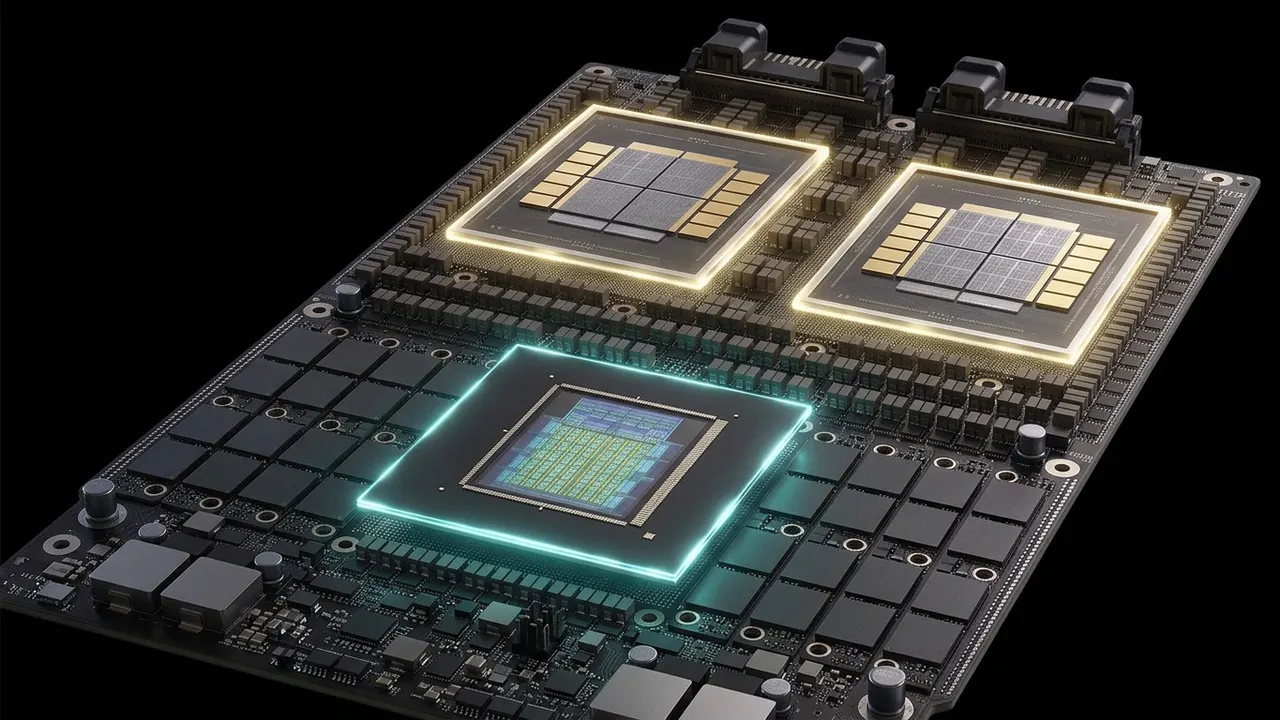
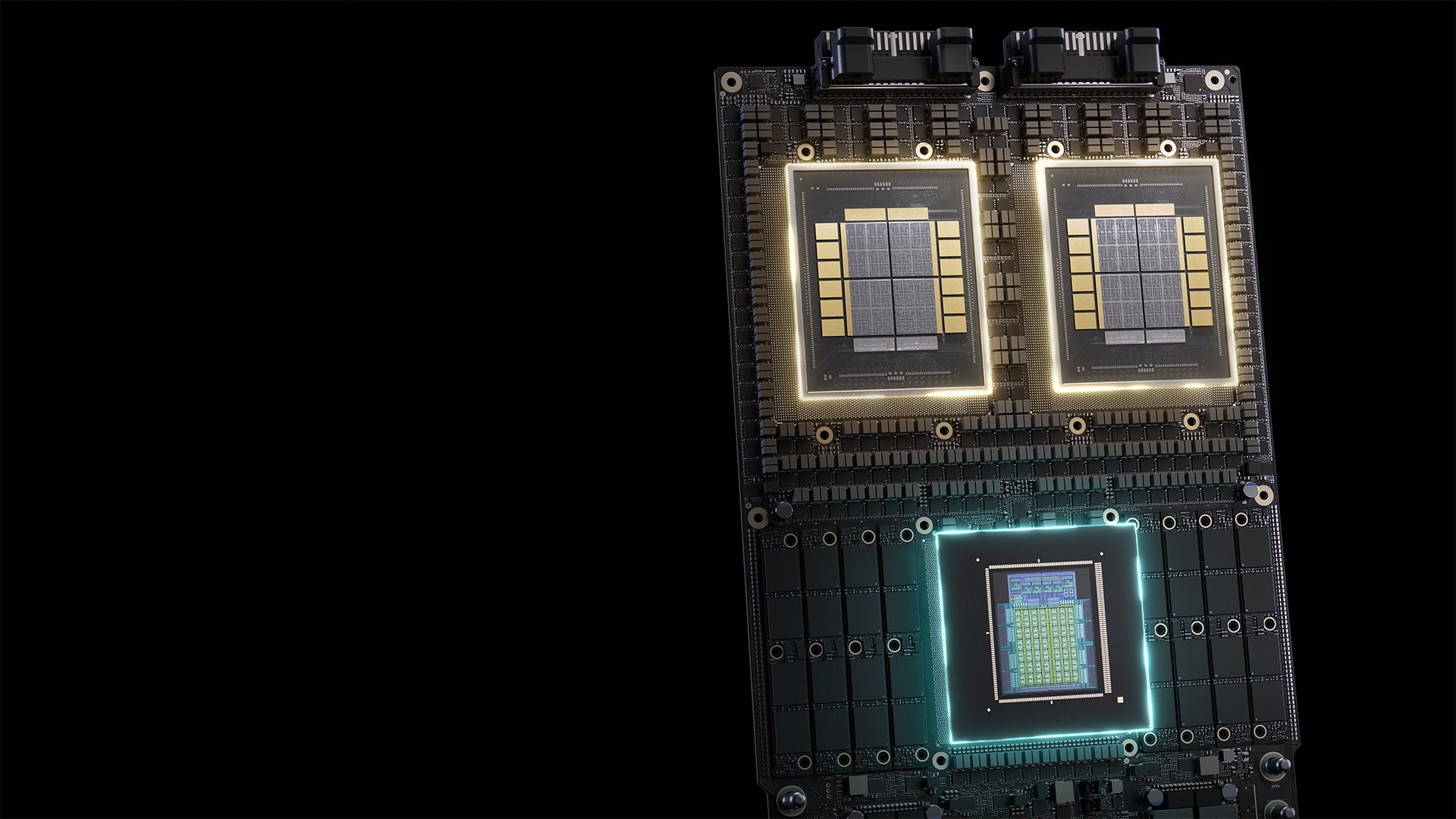
NVIDIA, Rebellions and SK Telecom used a Nov. 8 announcement to outline a collaboration aimed at Korean sovereign AI infrastructure. The stated plan would connect Rebellions’ next-generation R200 neural processing units to NVIDIA’s rack-scale inference platform through NVLink Fusion, with NVIDIA’s MGX rack architecture used for system development. Korea’s Ministry of Science and ICT is supporting the work. The document describes an intended technical path and a future deployment target; it does not report an installed R200 system or a completed SK Telecom rollout. [1]
At the center of the proposal is NVLink Fusion, which NVIDIA presents as a way for makers of custom accelerators to attach their chips to its scale-up networking and data-center ecosystem. Under the plan, Rebellions would link R200 NPUs inside a rack using NVIDIA NVLink. MGX reference designs would guide development, and the MGX supplier ecosystem would give Rebellions access to original design manufacturers and component vendors. Those are design and supply-chain arrangements described in the announcement, not evidence that production racks have been built. [1]
The calendar is explicit. The announcement sets 2028 as the expected point when R200 systems would be ready to deploy. That is a readiness target, not a current product qualification, a customer acceptance test or a commercial installation. It leaves open whether 2028 means general availability, limited sampling or the first site deployment. The distinction matters because the headline collaboration joins a future Korean NPU product to an existing NVIDIA rack architecture; it does not show that combination operating today. [1]
SK Telecom’s role is framed around operations, models and services. The company is described as bringing experience running AI data centers, proprietary foundation models and proprietary AI models including A.X K2, plus public-facing services developed under the government’s AI for All project. SK Telecom plans to deploy the planned systems in its AI data center using the MGX rack design. The announcement presents that as a plan to connect infrastructure with models and services; it does not state that A.X K2 or any other model is already running on R200 hardware. [1]
Advertisement
The companies also intend to develop a disaggregated inference approach in which different stages of generating an AI response run on the processor type best suited to the task. Their stated plan is to use NVIDIA GPUs for prefill, the stage that processes input context, and Rebellions NPUs for decode, the stage that generates output tokens, in pursuit of better throughput and power efficiency. The announcement gives no measured throughput gain, no named model, no batch size, no latency target and no public demonstration date for that split. It records an engineering intention and a rationale, not a verified result. [1]
Rebellions’ performance language is similarly forward-looking. The company says the R200 is being developed for low-latency and energy-efficient inference on large frontier models, including mixture-of-experts systems with trillions of parameters. Those are company descriptions of intended capability. The announcement contains no independent benchmark for the R200, no third-party validation of the GPU-prefill and NPU-decode design, and no measured comparison with alternative inference systems. It also does not quantify expected power or throughput gains. The absence of such data does not prove the design will fall short; it means the public document does not establish the claimed performance. [1]
The significance is therefore conditional on execution. If the planned systems are delivered and adopted, a Korean-designed NPU would be connected into NVIDIA’s rack-scale infrastructure ecosystem, and SK Telecom would seek to tie that hardware to Korean-language, industry-specific and public-facing AI services. The stated aim is to link Korean semiconductor development with the systems and operational capacity needed to deliver AI at scale. The announcement supports that integration as a plan. It does not establish commercial success, technical superiority or customer demand. [1]
The networking history behind the proposal is documented. NVIDIA completed its acquisition of Mellanox Technologies on April 27, 2020, in a transaction valued at $7 billion. The deal had been announced on March 11, 2019. NVIDIA described the combination as joining its computing work with Mellanox’s high-performance networking, with the goal of helping customers obtain higher performance, better use of computing resources and lower operating costs. That completed acquisition is a dated milestone in NVIDIA’s effort to combine compute and networking for data centers. [2]
Advertisement
NVIDIA also said at the time that the Mellanox deal was expected to be immediately accretive to non-GAAP gross margin, non-GAAP earnings per share and free cash flow, including incremental interest expense from $5 billion of notes it had issued. Those were financial expectations, not a benchmark for the later Rebellions collaboration. They show that NVIDIA treated networking as part of a broader data-center platform and business, not as a standalone product line. [2]
NVIDIA later announced Spectrum-X on May 28, 2023, describing an accelerated Ethernet platform built around the Spectrum-4 switch, BlueField-3 data processing units and acceleration software. NVIDIA claimed a 1.7-fold improvement in overall AI performance and power efficiency, along with consistent performance in multi-tenant environments. That figure was NVIDIA’s own claim; the announcement did not include an independent benchmark. It described Spectrum-4 as a 51 terabit-per-second Ethernet switch built for AI networks. [3]
The Spectrum-X announcement also described scale and interoperability. NVIDIA said one switch could support 256 ports at 200 gigabits per second; a two-tier leaf-spine design could reach 16,000 ports. It said the platform used standards-based Ethernet and was interoperable with Ethernet-based stacks. It cited RoCE extensions across Spectrum-4 switches, BlueField-3 DPUs and LinkX optics to create an end-to-end 400-gigabit Ethernet network for AI clouds. It listed Cumulus Linux, pure SONiC, NetQ and the DOCA framework among the software elements. Dell Technologies, Lenovo and Supermicro were named as offering the platform, and the switches, DPUs and optics were described as available at that time. [3]
NVIDIA also used the Spectrum-X announcement to describe Israel-1 as a blueprint and testbed for reference designs. It said the hyperscale generative AI supercomputer was being built for deployment in its Israeli data center on Dell PowerEdge XE9680 servers using the HGX H100 eight-GPU platform, BlueField-3 DPUs and Spectrum-4 switches. That example shows how NVIDIA framed networking, servers, DPUs and switches as parts of an integrated data-center design. The announcement did not establish the later status of that deployment or any result from it. [3]
Advertisement
The line from Mellanox to Spectrum-X to NVLink Fusion is an engineering and platform story. Mellanox brought high-performance networking into NVIDIA’s data-center portfolio. Spectrum-X packaged Ethernet switching, DPUs and software for AI clouds. NVLink Fusion is now presented as a way to attach custom accelerators to NVIDIA’s scale-up networking and MGX rack ecosystem. That continuity helps explain why the Rebellions and SK Telecom plan is technically plausible. It does not make future business outcomes certain, and the public announcement does not show a completed R200 deployment. [1] [2] [3]
The central distinction is between proposed deployment and completed installation. SK Telecom plans to deploy the systems, and Rebellions expects R200 systems to be ready in 2028. The announcement does not disclose procurement volumes, pricing, customer contracts, a signed site schedule or an installed R200 rack. It does not say which SK Telecom facilities would receive the systems or whether the work is a pilot, a preferred-supplier arrangement or a binding purchase. Any assessment that Korean NPUs are already operating inside SK Telecom’s AI data center at scale would go beyond what the document states. [1]
Another distinction separates company performance claims from independent benchmarks. Rebellions’ chief executive described the aim as delivering low-latency and energy-efficient inference for frontier models at scale, and the announcement says the R200 is being optimized for those goals. Those are company descriptions of intended capability. The announcement provides no independent benchmark results for the R200, no third-party validation of the disaggregated prefill-decode approach and no measured comparison against alternative inference systems. It also does not quantify expected power or throughput gains. [1]
If the plan is executed, the implications could extend beyond one product. SK Telecom could seek to combine NVIDIA GPUs and Rebellions NPUs in MGX-based racks, using different processors for different inference stages while drawing on shared power, cooling and rack designs. NVIDIA says MGX provides a foundation for GPU and NPU systems to share data-center design elements such as rack footprint, power delivery and cooling. That shared design could support infrastructure planning alongside Rebellions’ processor and system development. The actual effect would depend on delivery timing, software maturity, workload fit, supply-chain execution and customer adoption. [1]
Advertisement
Government support adds another dimension without resolving those questions. The Ministry of Science and ICT is backing joint work between NVIDIA and Korean NPU makers, starting with Rebellions and SK Telecom. The announcement frames the work as strengthening Korea’s sovereign AI infrastructure. It does not include funding amounts, procurement guarantees or a public deployment schedule from the ministry. Support for collaboration is not the same as a completed government purchase or an installed system. [1]
Several questions remain unanswered. It is not clear whether SK Telecom’s deployment language represents a binding commitment, a pilot, a preferred-supplier arrangement or a planning target. It is not clear how many systems would be deployed, at which sites, under what commercial terms or with what service-level commitments. It is also not clear whether the 2028 readiness target refers to general availability, limited sampling or initial deployment. These are open questions, not findings of failure. They are the points that separate a credible plan from a verified deployment. [1]
Things to watch next include whether Rebellions reaches the stated 2028 point for R200 systems being ready for deployment, and whether that milestone means general availability or a narrower readiness stage. Another is whether SK Telecom announces site-level deployment details, procurement volumes or service launches tied to MGX-based systems. Also worth watching are independent benchmarks for R200 inference, demonstrations of the planned GPU-prefill and NPU-decode split, and evidence that MGX rack integration has moved from reference design to qualified hardware. Each would clarify whether the collaboration is moving from announcement to installation. [1]
Sources
NVIDIA Rebellions SK Telecom infrastructure announcement
NVIDIA completion of Mellanox acquisition
NVIDIA Spectrum-X and Israel-1 announcement
NVIDIA CEO transition announcement
Prepared with AI assistance from the cited sources.
The Cali Reporter newsletter
The stories worth your time.
California, the country, and what comes next. Join our free newsletter for reporting that keeps you informed.
More in Artificial Intelligence
- Mellanox Deal Terms, Israel-1 and NVIDIA’s Interim Leadership
NVIDIA agreed to buy Mellanox in March 2019 at a $6.9 billion enterprise value and completed the deal in April 2020 at a $7 billion transaction value. Eyal Waldman led Mellanox; Colette Kress, a finance executive, is NVIDIA’s interim CEO in 2026.
- Reuters Reports Second Unnamed Employee Relationship Involving Former NVIDIA CEO Huang
Reuters reported Nov. 12, citing two people familiar with the matter, that Jensen Huang, now NVIDIA's former CEO, had an intimate relationship with a second unnamed employee. The account is attributed, not adjudicated; Huang's Nov. 8 message admitted infidelity without naming anyone, and the board's stated investigation concerns reported foreign-intelligence concerns.
- House-Passed Remote Access Bill Awaits Senate Committee Action as Chip Licensing Rules Set Conditions
H.R.2683 remains a proposal, not law; Commerce’s January rule allows conditional case-by-case review for some exports and IaaS use, while senators seek records on diversion allegations.