Brain Scans Reveal Shared and Distinct Antidepressant Effects Within Two Weeks
Early functional connectivity changes in MDD patients appear common across treatments, while drug-specific patterns emerge in subsets.

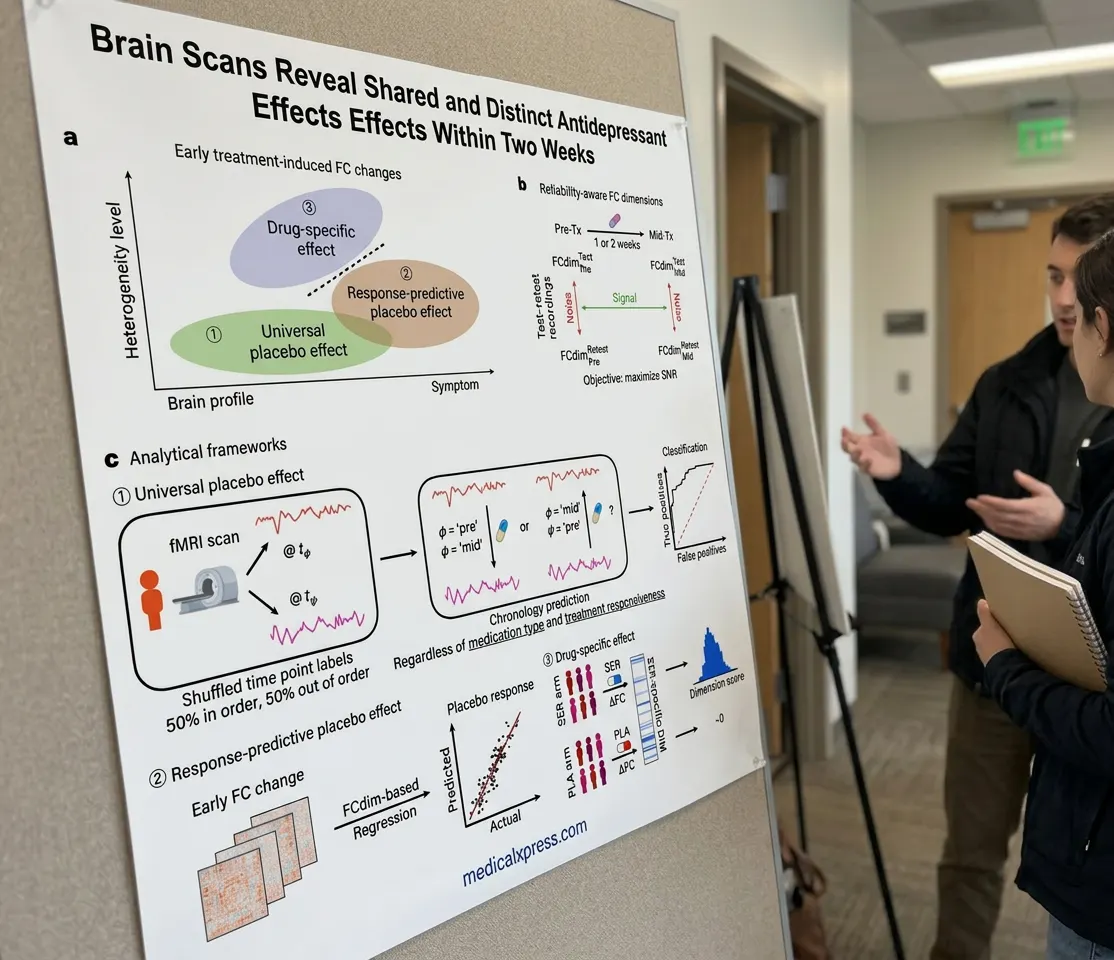

Brain scans from 386 adults with major depressive disorder (MDD) show early, shared changes in functional connectivity within a visual, precuneus, thalamus system, observed regardless of treatment type or symptom improvement, according to researchers at Stanford University, UT Austin and colleagues. Published in Nature Mental Health, the study used resting-state fMRI to compare pre- and post-treatment scans after one or two weeks of placebo, sertraline, or escitalopram.
Xiaoyu Tong, Gregory A. Fonzo and team identified distinct patterns: placebo-related symptom improvement correlated with changes in striatal and attention networks, while antidepressant-specific effects involved the amygdala, midcingulate and orbitofrontal cortices, and cerebellum, but only in a subset of treated patients. These drug-specific signatures could be predicted using a placebo response model for nonresponders.
The authors suggest these findings clarify mechanisms of antidepressant action and may support future individualized treatment selection using early brain imaging.
Source: Nature Mental Health (2026)
Prepared with AI assistance from the cited sources.
The Cali Reporter newsletter
The stories worth your time.
California, the country, and what comes next. Join our free newsletter for reporting that keeps you informed.
More in Health & Medicine
- Brain Energy Mismatches in Schizophrenia
A new study explores the potential role of energy bottlenecks in brain cells in explaining fragmented experiences of time, space, and self in schizophrenia.
- Brazil Reports First Mpox Death in 2026
Brazil has recorded its first mpox-related death in 2026, but public health officials are not classifying the current surge in cases as an outbreak, according to the Fiocruz Institute.
- Personalized Therapies for IBD May Target Specific Harmful Gut Bacteria
A study led by Dr. Lukas Mager and Prof. Kathy McCoy has identified two gut bacteria that promote inflammation in inflammatory bowel disease, opening the door for personalized treatments.