Dinosaurs May Have Eaten Seaweed Based on Fossil Evidence
New research suggests that marine resources, such as seaweed, may have supplemented the diets of dinosaurs and other prehistoric animals along ancient coastlines, according to a study published in Frontiers in Ecology…

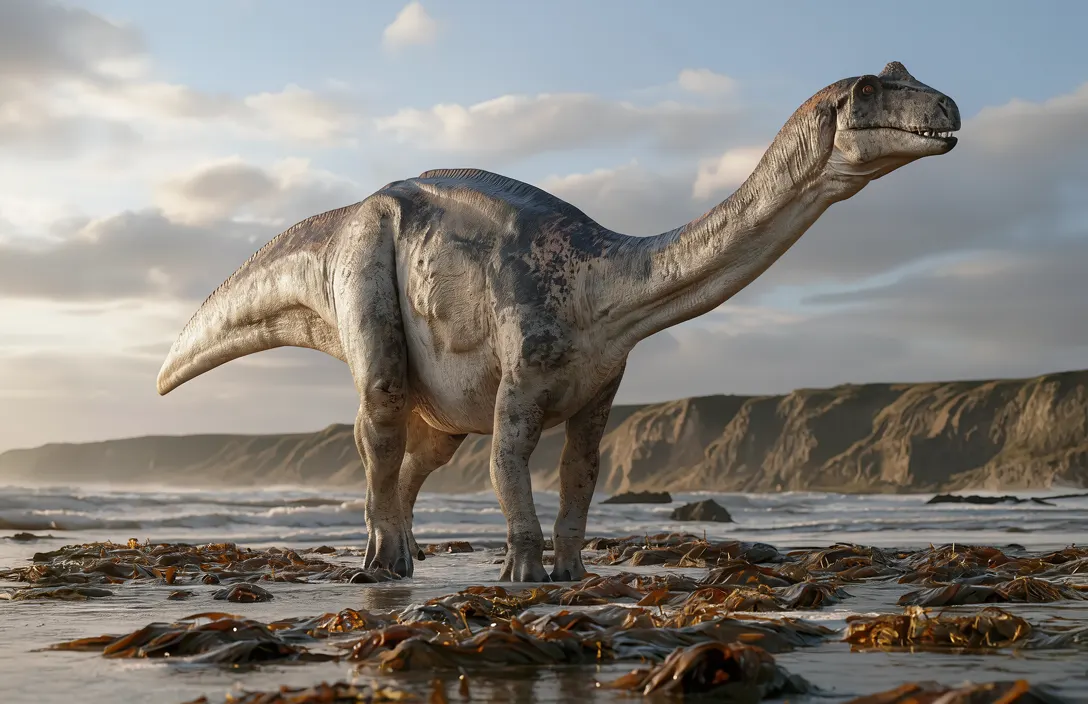
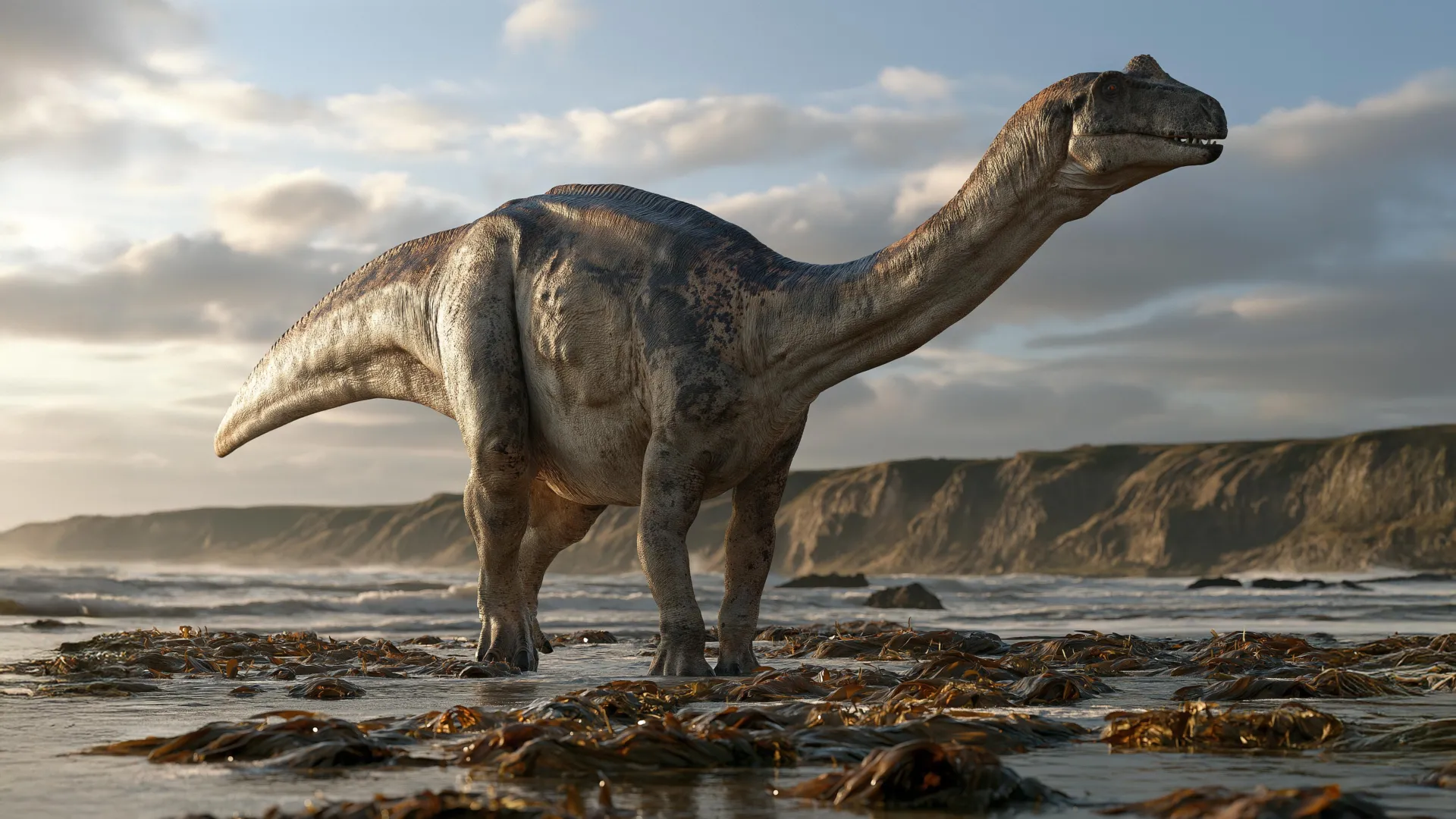
Dinosaurs living along ancient coastlines may have consumed seaweed and other marine resources, as indicated by chemical signatures preserved in fossils. Scientists refer to this phenomenon as marine subsidization (MS), a process by which ocean-derived nutrients are incorporated into the food chains of terrestrial organisms, particularly during times of limited land-based food availability. A new study published in Frontiers in Ecology and Evolution examined the carbon isotope composition of dinosaur, fish, and crocodile tooth enamel to determine their dietary sources. The research found that coastal terrestrial organisms during the Cretaceous Period relied on marine resources to supplement their diets, similar to modern organisms. This discovery helps explain a longstanding mystery involving the unusually high δ13C values found in dinosaur teeth, which suggest a marine influence on their diets (source ID: 1). [1]
Fossils from coastal regions bordering the Western Interior Seaway and the ancient Gulf of Mexico were analyzed to investigate the presence of marine nutrients in prehistoric food chains. The study compared fossils from coastal and inland locations, revealing that fossils from coastal environments consistently contained higher δ13C values than those from inland formations. These findings indicate that nutrients originating in the ocean were entering food chains on land millions of years ago. The researchers suggest that marine macroalgae, or seaweed, is the most likely source of the extra carbon, as it is present along coastlines and has been available for millions of years. This pattern is consistent across a variety of animals, from fish to megaherbivores, suggesting that seaweed may have been a common food source for many herbivorous dinosaurs (source ID: 1). [1]
Not all dinosaurs relied on marine resources, as evidenced by the tooth enamel of Tenontosaurus tilletti, a large plant-eating dinosaur whose δ13C values were comparable to modern land-based herbivores. This suggests that Tenontosaurus tilletti did not consume seaweed or other marine-derived nutrients. However, the variation in δ13C values among species supports the researchers' interpretation that the elevated readings reflect genuine differences in diet rather than post-mortem geological alterations. The study highlights the deep connections between terrestrial and marine ecosystems, emphasizing that these environmental linkages have existed for hundreds of millions of years (source ID: 1). [1]
Dinosaurs living along ancient coastlines may have consumed seaweed and other marine resources, as indicated by chemical signatures preserved in fossils. A study published in Frontiers in Ecology and Evolution examined the carbon isotope composition of dinosaur, fish, and crocodile tooth enamel to determine dietary sources. Researchers found that marine resources contributed to prehistoric food chains, with evidence suggesting that ocean nutrients were passed along the food chain and incorporated into the minerals of bones and teeth of various animals (source ID 1). [1]
Advertisement
The study analyzed fossils from coastal regions bordering the Western Interior Seaway and the ancient Gulf of Mexico. These areas were once part of a vast inland sea that divided North America. By comparing fossils from coastal and inland locations, researchers observed that coastal fossils consistently contained higher δ13C values, which are indicative of marine dietary contributions. This pattern remained consistent across different locations and geological ages, providing the first evidence of marine subsidization in prehistoric ecosystems (source ID 1). [1]
Seaweed emerged as the most likely explanation for the widespread chemical signatures found in the fossils. Researchers suggested that marine macroalgae, or seaweeds, were the primary marine food source that could have entered the food chain near its base. This would explain why the chemical pattern was observed in a wide variety of animals, from fish to megaherbivores. However, not all dinosaurs relied on marine resources, as evidenced by the tooth enamel of Tenontosaurus tilletti, which showed δ13C values comparable to modern land-based herbivores (source ID 1). [1]
Dinosaurs living along ancient coastlines may have consumed seaweed and other marine resources, as indicated by chemical signatures preserved in fossils. New research suggests that marine resources washed onto prehistoric beaches helped feed dinosaurs and their prey millions of years ago. Scientists call this process marine subsidization (MS), which is especially common in coastal environments and can become more important when food on land is limited, such as during droughts. This relationship between land and sea existed during the age of dinosaurs, as evidenced by the chemical signatures found in fossils (Source ID: 1). [1]
The discovery helps explain a longstanding mystery involving the chemical composition of dinosaur teeth. Scientists can measure the relative amounts of carbon isotopes, expressed as δ13C, to identify a chemical fingerprint that passes from food into the animals that consume it. As animals eat, this carbon signature becomes incorporated into their tooth enamel. However, previous measurements of dinosaur teeth have consistently revealed unusually high values, which exceed what scientists would expect from animals that ate only plants growing on land (Source ID: 1). [1]
Advertisement
To investigate, researchers examined fossils from (once) coastal locations bordering the Western Interior Seaway and the ancient coastline of the Gulf of Mexico. The team also analyzed fossils from locations farther inland, allowing them to compare animals that lived near the ocean with those that occupied landlocked environments. A clear pattern emerged. Fossils from coastal environments consistently contained higher δ13C values than those from the inland formation. These findings provide the first evidence of marine subsidization in prehistoric ecosystems, indicating that nutrients originating in the ocean were entering food chains on land millions of years ago (Source ID: 1). [1]
Dinosaurs living along ancient coastlines may have consumed seaweed and other marine resources, as indicated by chemical signatures preserved in fossils. Researchers analyzed fossils from coastal regions bordering the Western Interior Seaway and the ancient Gulf of Mexico to investigate the presence of marine nutrients in prehistoric food chains. The study found that marine resources contributed to prehistoric food chains, with evidence showing that ocean resources were passed along the food chain and incorporated into the minerals of bones and teeth of dinosaurs, crocodiles, turtles, and fish (Evidence ID 1). [1]
The discovery helps explain a longstanding mystery involving the chemical composition of dinosaur teeth. Scientists can measure the relative amounts of carbon isotopes, expressed as δ13C, to identify a chemical fingerprint that passes from food into the animals that consume it. Previous measurements of dinosaur teeth have consistently revealed unusually high δ13C values, which exceed what scientists would expect from animals that ate only plants growing on land. One possible explanation is that dinosaurs, or the animals they consumed, were obtaining some of their nutrients from the ocean (Evidence ID 1). [1]
To investigate, researchers examined fossils from (once) coastal locations bordering the Western Interior Seaway and the ancient coastline of the Gulf of Mexico. Fossils from coastal environments consistently contained higher δ13C values than those from inland formations. These findings provide the first evidence of marine subsidization in prehistoric ecosystems, indicating that nutrients originating in the ocean were entering food chains on land millions of years ago. Seaweed emerged as the most likely explanation for the widespread chemical signatures found in the fossils (Evidence ID 1). [1]
Advertisement
The Cali Reporter newsletter
The stories worth your time.
California, the country, and what comes next. Join our free newsletter for reporting that keeps you informed.
More in Science
- New Study Suggests Uranus and Neptune's Magnetic Fields May Change Dramatically
A new study suggests that the magnetic fields of Uranus and Neptune may be far less stable than previously thought, with their magnetic axes potentially shifting by tens of degrees within decades.
- Erect-Crested Penguin Populations Show Contrasting Trends
A new study reveals that the Erect-crested penguin populations on the Bounty and Antipodes islands are experiencing dramatically different outcomes, with one stable and the other declining sharply.
- New Study Suggests Earth May Have Generated Its Own Water
A recent study published in Nature Geoscience proposes that Earth may have created a significant portion of its water through chemical reactions during its formation, rather than relying solely on external sources like…