Highway 101 at 100: A Route With Receipts
The Good News Network marks the 1926 completion of US Highway 101. Here is what the source supports, what it leaves open, and what to watch next.

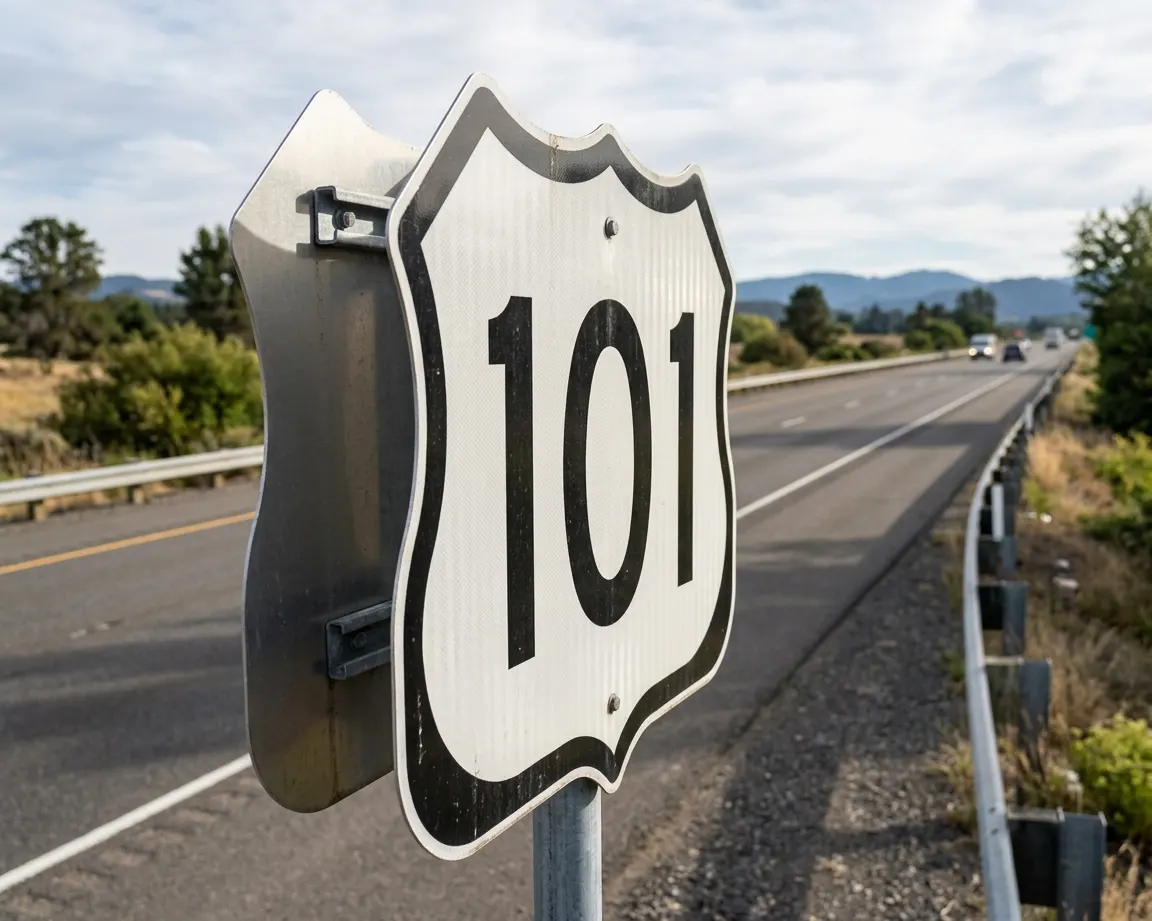
The milestone is simple: the Good News Network item marks 100 years since US Highway 101 was finished and dates completion to 1926. It says the route traverses California, Oregon, and Washington, passes most of the West Coast’s famous cities, runs through major Silicon Valley counties, crosses the Golden Gate Bridge, and goes through Redwoods National Park. That is the core anniversary story. The item does not supply a ceremony, cost, or builder, so the strongest sentence is the one it supports: 101 was completed in 1926 and tied three states together. [1]
For California readers, the first hook is the source’s California detail. The item names California first among the three states and specifically notes passage through major Silicon Valley counties, the Golden Gate Bridge, and Redwoods National Park. That combination matters because the source does not reduce 101 to one kind of road. It ties the highway to Silicon Valley counties, a landmark bridge, and a national park in one sentence. [1]
The source does not list every California city or county. It gives no mileage, traffic counts, construction details, or last California segment finished. It does not say which communities were most involved in the 1926 completion or how alignments changed. Those are limits, but the item still supports a firm statement: the source documents a 1926 completion and a route through California, Oregon, and Washington. It does not support a claim that a particular city hosted a dedication or that a particular engineer led the work. [1]
Oregon supplies one of the item’s most concrete details: 77 state parks along the rugged coastline, with the highway entering and exiting them before skirting Portland and crossing the Astoria–Megler Bridge over the Columbia River into Washington. The source does not explain how those parks are managed or funded, and it does not describe design intent. It gives the count and the coastal setting. That is enough to show that 101’s Oregon identity is not one overlook or one town; it is a long sequence of public places tied to the coast. [1]
Advertisement
The Astoria–Megler Bridge detail is also a reminder that the source describes a route across state lines. It says the highway crosses the Columbia River into Washington. It does not date the bridge, describe construction, or say when that crossing became part of the route. Readers should treat the bridge as part of the route sketch the source supplies, not as a separately documented historical claim in the item. [1]
In Washington, the source says the highway continues until it reaches the Quinault Indian Reservation, entering near Lake Quinault at the edge of Olympic National Park. It skirts the Olympic Peninsula and the foothills of the eponymous mountains, including a portion along the southern shore of Lake Crescent, one of the deepest lakes in the state. A larger loop around the peninsula sees 101 turn south, passing the Skokomish Indian Reservation on the Olympic Loop Highway until it ends at the state capital. These details place the road alongside tribal lands, a national park, a deep lake, and a state capital in one arc. [1]
The source does not include voices from the Quinault or Skokomish reservations. It does not describe current conditions at Olympic National Park, Lake Crescent, or the state capital. It does not say how the highway affects tribal access, park visitation, or local economies. The named places are still useful because they show the route’s range. They are not evidence that any particular group supports or opposes an anniversary event. [1]
Why should a 1926 completion matter now? The source’s route description is the answer. The highway links the West Coast’s famous cities, Silicon Valley counties, the Golden Gate Bridge, Redwoods National Park, Oregon’s coastal parks, the Columbia River crossing, Olympic National Park, Lake Crescent, and two Indian reservations named in the item. That is a lot of public geography for one road. An anniversary can be nostalgic, but this one can also prompt a specific look at how many jurisdictions one highway touches. [1]
Advertisement
The source supports a completion milestone, not a claim that every mile stayed the same. It says the highway was finished and describes a route that enters and exits 77 state parks, crosses a river bridge, runs at the edge of Olympic National Park, and passes reservations. It does not say alignments never changed or that every named crossing was part of the 1926 road. The anniversary is about completion as the source presents it; the route description is the source’s current sketch. [1]
The verified historical background in the item is narrow and clear. The completion is dated to 1926. The route is said to traverse California, Oregon, and Washington. The item names the Golden Gate Bridge, Redwoods National Park, 77 Oregon state parks, the Astoria–Megler Bridge, the Quinault Indian Reservation, Lake Quinault, Olympic National Park, Lake Crescent, the Skokomish Indian Reservation, the Olympic Loop Highway, and the state capital. Those are the receipts the source provides. [1]
The source does not identify engineers, builders, costs, or a dedication ceremony. It does not say which segment was finished last, though it frames the item as completion of US Highway 101 as a whole. It does not explain how the route was designated or how the 1926 road related to earlier paths. Readers should treat the anniversary as a documented completion date, not a full construction history. That boundary keeps the story accurate. [1]
The limits matter because anniversary stories can slide into invention. The item does not tell us whether any state, city, tribe, or park agency is planning a centennial event. It includes no quotations from officials, historians, or travelers. It does not report current road conditions, closures, or projects. It does not say whether the route is signed as a historic byway or whether any section has been nominated for recognition. The item also does not list every city, county, park, or reservation along the route. Those are gaps in the supplied account, not details to fill in. [1]
Advertisement
There is also a California-specific gap. The source says 101 passes major Silicon Valley counties and Redwoods National Park, but it does not name the counties or describe the redwood segment. It does not say how the highway affects park visitation, local economies, or tribal access. It does not say whether the Golden Gate Bridge crossing is a current alignment or a symbolic link in the route’s identity. The useful move is to separate what is documented—the 1926 completion and the broad route—from what is inferred. [1]
Several questions remain open. How do tribal governments view a highway anniversary? What does park access mean for local communities? How are the 77 Oregon state parks connected to the highway’s management today? The source names the Quinault and Skokomish reservations but does not include their voices. It names Olympic National Park and Lake Crescent but does not describe current conditions or visitation. These are not rhetorical questions; they are gaps in the record. [1]
Another open question is what kind of public memory the anniversary will produce. The source does not announce events, commissions, or publications. It does not say whether California, Oregon, or Washington officials will mark the centennial. It does not say whether local historical groups are documenting the route. Any calendar item or event claim would need verification beyond this item. The source gives enough to start a reporting checklist, not enough to declare a celebration. [1]
What should readers watch next? One question is whether California, Oregon, and Washington officials or local historical groups mark the centennial in any public way. The source does not announce such events, so any calendar item would need verification. A second question is whether tribal governments and park managers shape the anniversary narrative around access, conservation, or cultural landscapes. The source names the Quinault and Skokomish reservations but does not include their voices. A third question is whether the anniversary prompts new historical work on construction and alignments, since the source supplies only the 1926 completion date and a route sketch. [1]
Advertisement
A fourth question is practical: what does the next century of 101 look like? The source does not discuss maintenance, climate resilience, traffic safety, or funding. Those are future-facing questions, not findings. Readers can still use the anniversary as a prompt to ask them. The source gives enough detail to start that conversation and not enough to finish it. [1]
For readers who want to do something concrete, the source points to a simple itinerary of attention: the Golden Gate Bridge, Redwoods National Park, Oregon’s coastal state parks, the Astoria–Megler Bridge, Olympic National Park, Lake Crescent, and the Quinault and Skokomish reservations. That is not a prescribed trip, and the source does not vouch for current conditions or access. It is a list of places the highway touches. A responsible anniversary gesture is to start with those named places, confirm current access with the relevant park or tribal government, and ask local historical organizations what they are documenting. The anniversary is a receipt for the route’s existence; the next step is to treat the route’s many jurisdictions with the same specificity. [1]
Sources
Prepared with AI assistance from the cited sources.
The Cali Reporter newsletter
The stories worth your time.
California, the country, and what comes next. Join our free newsletter for reporting that keeps you informed.
More in Good News
- World's First Non-Malignant Bone Marrow Transplant Successfully Treats Aplastic Anemia
A groundbreaking medical achievement has been made with the successful use of a deceased organ donor's bone marrow to treat a non-malignant disease, offering new hope for patients with aplastic anemia.
- Preserving Kids' Art Through Collaborative Collages
An artist has found a way to help parents preserve their children's artwork while reigniting their own creativity, leading to a growing trend among families.
- Spain's Cantabrian Brown Bear Population Doubles in 20 Years
Spain has witnessed a remarkable recovery of its Cantabrian brown bear population over the last two decades, with numbers doubling to 370 individuals and their breeding range expanding significantly.