Human tau seeds trigger disease-specific shapes in mouse brains, new study finds
Study in Nature shows that injectable human tau aggregates from Alzheimer’s and corticobasal degeneration template their 3D folds onto mouse tau, supporting the prion-like seeding model.

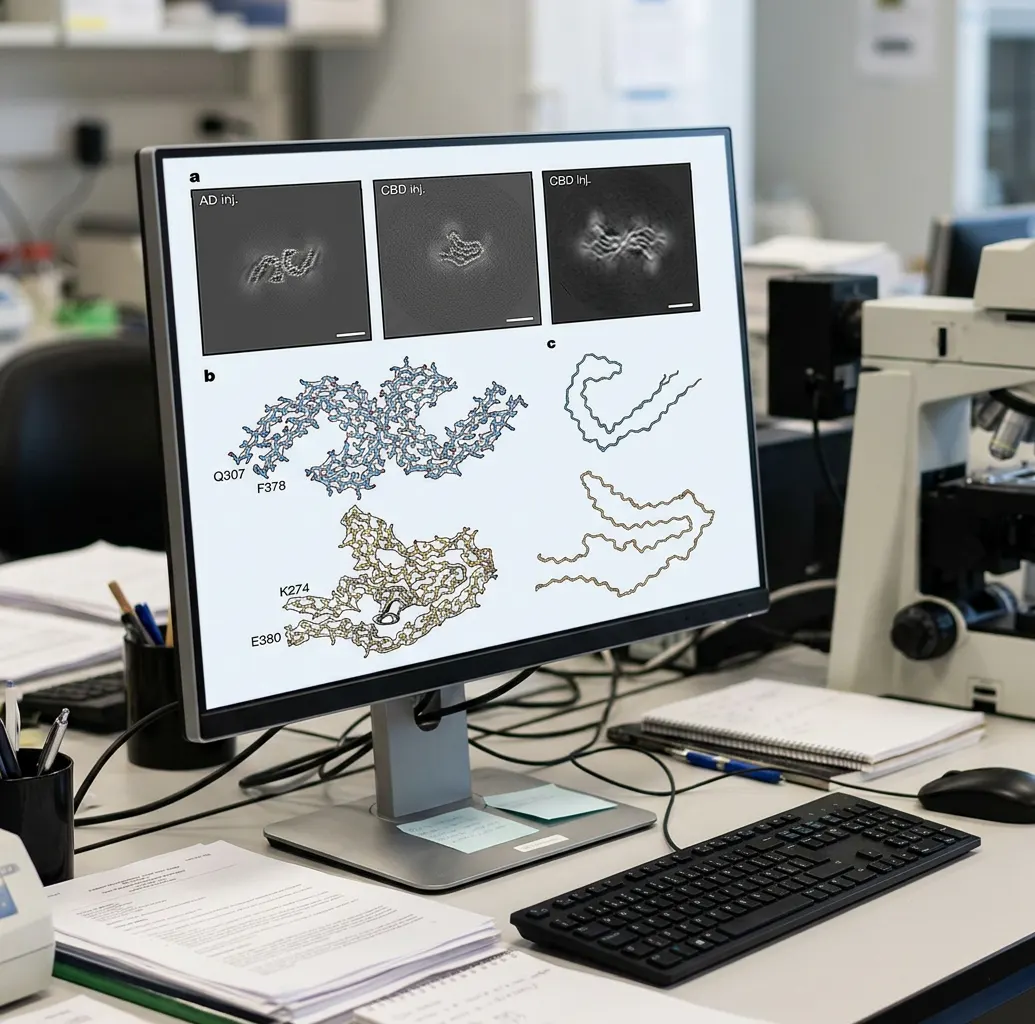

Human tau seeds from Alzheimer’s disease (AD) and corticobasal degeneration (CBD) induced mouse tau to misfold into disease-specific 3D structures, according to a Nature study. Researchers injected minute amounts of tau extracted from postmortem human brains into healthy mice. Within a week, the human seeds disappeared, but the mice’s own tau continued forming fibers with precise folds matching the original seeds over nine to twelve months.
High-resolution cryo-electron microscopy confirmed that AD seeds prompted mouse tau to adopt the characteristic paired helical filament structure, while CBD seeds induced the corresponding CBD fold. The structural identity of each seed strain was retained as tau propagated through the brain.
The study also found cell-type differences: AD seeds caused tau accumulation mainly in neurons, whereas CBD seeds produced clumps in both neurons and glial cells, mirroring patterns seen in human patients. These findings support the prion-like seeding hypothesis for tau and suggest that distinct tau folds act as strains with stable structural identities, informing future therapeutic and diagnostic strategies.
Nature, 2026. DOI: 10.1038/s41586-026-11061-x
Prepared with AI assistance from the cited sources.
The Cali Reporter newsletter
The stories worth your time.
California, the country, and what comes next. Join our free newsletter for reporting that keeps you informed.
More in Health & Medicine
- Brain Energy Mismatches in Schizophrenia
A new study explores the potential role of energy bottlenecks in brain cells in explaining fragmented experiences of time, space, and self in schizophrenia.
- Brazil Reports First Mpox Death in 2026
Brazil has recorded its first mpox-related death in 2026, but public health officials are not classifying the current surge in cases as an outbreak, according to the Fiocruz Institute.
- Personalized Therapies for IBD May Target Specific Harmful Gut Bacteria
A study led by Dr. Lukas Mager and Prof. Kathy McCoy has identified two gut bacteria that promote inflammation in inflammatory bowel disease, opening the door for personalized treatments.