Predator Scent Activates Anxiety-Related Brain Circuit in Mice
A study published in Molecular Psychiatry identifies a brain pathway linked to anxiety-like behavior in mice exposed to predator-like odors.

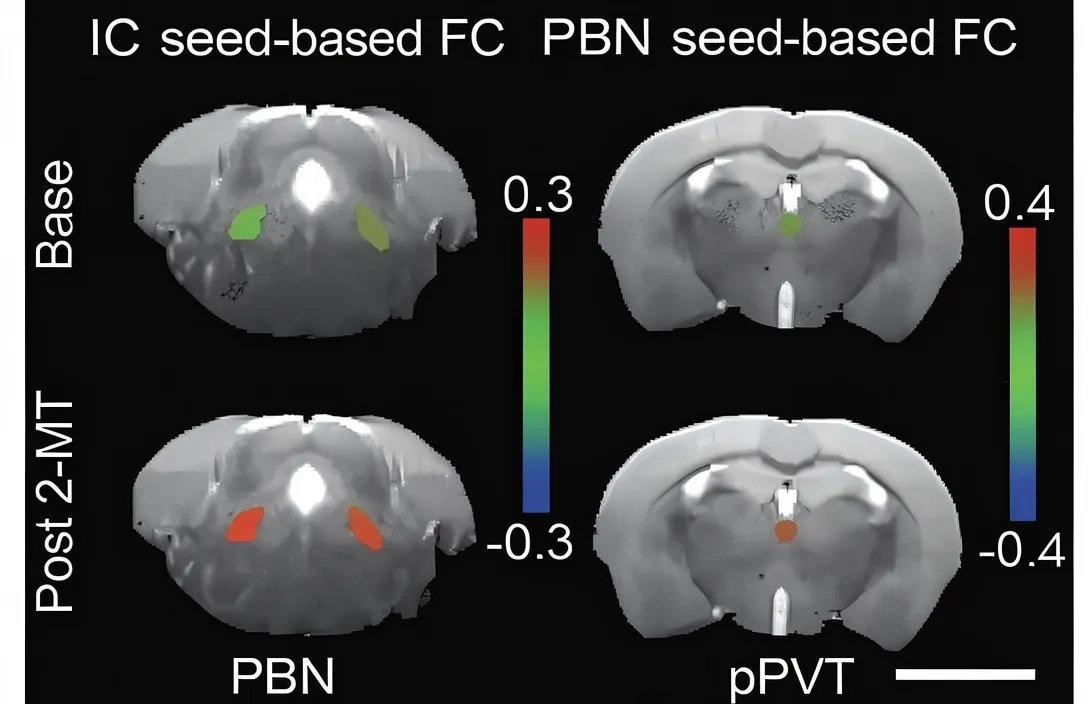

Researchers have identified a brain pathway that contributes to anxiety-like behavior in mice exposed to a predator-like odor, according to a study published in Molecular Psychiatry (2026). The research team from the Guangdong Institute of Intelligence Science and Technology, Beijing Normal University at Zhuhai, and the Chinese Academy of Sciences examined the neural underpinnings of anxiety-like behaviors by exposing mice to two different threat-related stimuli: a predator-like odorant called 2-methyl-2-thiazoline (2-MT) and an electric shock to their feet (source ID: 1). [1]
Using single-cell calcium imaging, the researchers observed the activity of neurons in the mice's brains and found that the predator-like odor and footshock activated some of the same neurons in the insular cortex, which send signals to the parabrachial nucleus in the brainstem. This communication pathway was found to extend from the brainstem to the thalamus (source ID: 1). [1]
The study also revealed that exposure to the predator-like odor increased corticotropin-releasing factor (CRF) signals in the parabrachial nucleus, where CRF enhances neuronal excitability and CRF receptor 1 (CRFR1) signaling facilitates neuronal firing. These findings suggest that CRF plays a critical role in the neural circuitry associated with anxiety-related behaviors (source ID: 1). [1]
Researchers have identified a brain pathway that contributes to anxiety-like behavior in mice exposed to a predator-like odor, according to a study published in Molecular Psychiatry (2026). Using single-cell calcium imaging, the researchers observed the activity of neurons in the mice's brains and found that the predator-like odor and footshock activated some of the same neurons in the insular cortex, which send signals to the parabrachial nucleus in the brainstem (Source ID: 1). [1]
Advertisement
The study also revealed that exposure to the predator-like odor increased corticotropin-releasing factor (CRF) signals in the parabrachial nucleus, where CRF enhances neuronal excitability and CRF receptor 1 (CRFR1) signaling facilitates a/mIC-terminal-evoked firing (Source ID: 1). [1]
When the researchers interrupted this pathway or blocked the effects of CRF on brainstem neurons, the mice showed less anxiety-like behavior in response to the predator-like odor (Source ID: 1). [1]
Human neuroimaging further reveals stronger functional coupling within a putative homologous aIC–PBN–pPVT network in individuals with anxiety symptoms, and the strength of this coupling correlates with anxiety severity (Source ID: 1). [1]
Researchers identified a brain pathway that contributes to anxiety-like behavior in mice exposed to a predator-like odor, according to a study published in Molecular Psychiatry (2026). Using single-cell calcium imaging, the researchers observed the activity of neurons in the mice's brains and found that the predator-like odor and footshock activated some of the same neurons in the insular cortex, which send signals to the parabrachial nucleus in the brainstem (Source ID: 1). [1]
Advertisement
The study also revealed that exposure to the predator-like odor increased corticotropin-releasing factor (CRF) signals in the parabrachial nucleus, where CRF enhances neuronal excitability and CRF receptor 1 (CRFR1) signaling facilitates a/mIC-terminal-evoked firing (Source ID: 1). This finding suggests that CRF plays a significant role in the neural responses associated with anxiety-like behaviors in mice. [1]
When the researchers interrupted this pathway or blocked the effects of CRF on brainstem neurons, the mice showed less anxiety-like behavior in response to the predator-like odor (Source ID: 1). These results indicate that the identified pathway is critical in mediating anxiety-like responses and may provide insights into the neural mechanisms of anxiety disorders in humans. [1]
Researchers identified a brain pathway that contributes to anxiety-like behavior in mice exposed to a predator-like odor, according to a study published in Molecular Psychiatry (2026). Using single-cell calcium imaging, the researchers observed the activity of neurons in the mice's brains and found that the predator-like odor and footshock activated some of the same neurons in the insular cortex, which send signals to the parabrachial nucleus in the brainstem (Source ID: 1). [1]
The study also revealed that exposure to the predator-like odor increased corticotropin-releasing factor (CRF) signals in the parabrachial nucleus, where CRF enhances neuronal excitability and CRF receptor 1 (CRFR1) signaling facilitates a/mIC-terminal-evoked firing (Source ID: 1). When the researchers interrupted this pathway or blocked the effects of CRF on brainstem neurons, the mice showed less anxiety-like behavior in response to the predator-like odor (Source ID: 1). [1]
Advertisement
The researchers observed that the predator-like odor and the footshock activated some of the same neurons in the insular cortex, which sent signals to the parabrachial nucleus in the brainstem. This communication pathway was found to extend from the brainstem to the thalamus (Source ID: 1). [1]
Sources
Prepared with AI assistance from the cited sources.
The Cali Reporter newsletter
The stories worth your time.
California, the country, and what comes next. Join our free newsletter for reporting that keeps you informed.
More in Health & Medicine
- Brain Energy Mismatches in Schizophrenia
A new study explores the potential role of energy bottlenecks in brain cells in explaining fragmented experiences of time, space, and self in schizophrenia.
- Brazil Reports First Mpox Death in 2026
Brazil has recorded its first mpox-related death in 2026, but public health officials are not classifying the current surge in cases as an outbreak, according to the Fiocruz Institute.
- Personalized Therapies for IBD May Target Specific Harmful Gut Bacteria
A study led by Dr. Lukas Mager and Prof. Kathy McCoy has identified two gut bacteria that promote inflammation in inflammatory bowel disease, opening the door for personalized treatments.