San Francisco's Neighborhood-School Shift Faces a Long Timeline and Uneven Results
Maria Su's plan to end the enrollment lottery will start in 2028-29, while two former superintendents describe patience, focus and candor as the core of lasting district turnarounds.

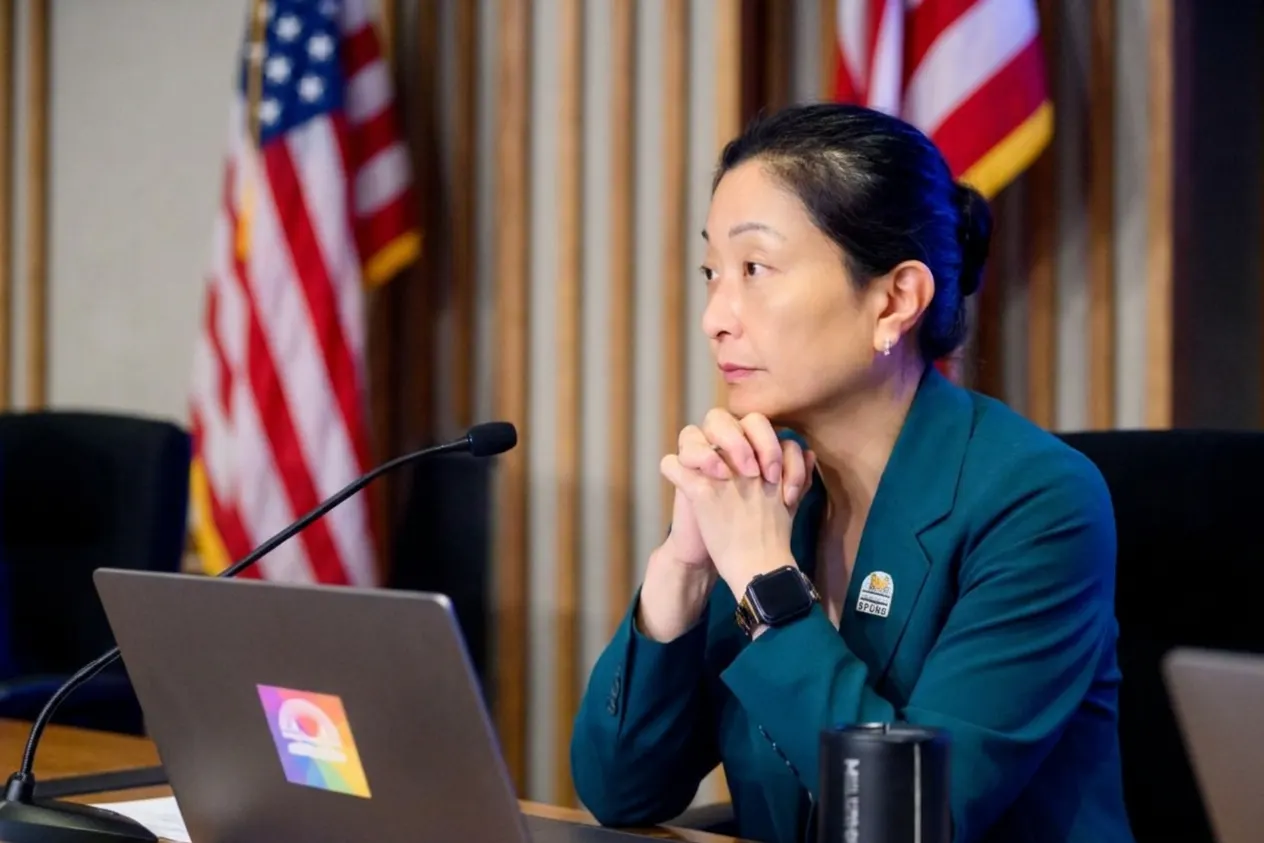
Last month, the San Francisco school board supported Superintendent Maria Su's proposal to replace the district's enrollment lottery with neighborhood schools, an assignment method the source says most California districts use. Under the plan, beginning in 2028-29, students would be placed at a school tied to their home address, though they could still seek citywide programs such as language immersion. Su cautioned that the change would not arrive quickly and would take years. [1]
Su has led the district since 2024 under a contract that runs through June 2028. Before taking the job, she worked at San Francisco City Hall as head of the Department of Children, Youth and Their Families rather than moving up through school administration. The source reports that her political experience was seen as a possible asset in navigating district factions linked to turnover that saw three superintendents leave since 2012. The district has balanced its budget during her tenure, but student outcomes have changed little. [1]
Over the summer, Su brought in John Davis as deputy superintendent for academics. Davis spent about three decades in Baltimore and District of Columbia schools, and the source describes him as supplying hands-on management that had been absent from Su's team. Davis has not softened his assessments for the board. When the district presented its literacy data in August, he warned that proving a new curriculum works in classrooms is much harder than launching it. At the Oct. 13 meeting, he said a district undergoing this kind of turnover needs at least five to 10 years. [1]
San Francisco serves about 48,500 students in district-run schools, according to 2025-26 figures from the California Department of Education cited by the source. Su told the board that the enrollment change puts responsibility squarely on the district to make every neighborhood school worth choosing. That is a substantial shift for a system that has used a lottery to assign students beyond their local campuses. [1]
Advertisement
The comparison districts differ in ways that matter. Long Beach enrolls 61,400 students and Garden Grove 35,900, compared with San Francisco's 48,500. Long Beach and Garden Grove serve larger shares of low-income students, 59% and 78%, respectively, against 54% in San Francisco. English learners make up 25% of San Francisco's enrollment, 14% of Long Beach's and 27% of Garden Grove's. Latino students are 31% in San Francisco, 59% in Long Beach and 53% in Garden Grove; Asian students are 30%, 7% and 36%. The Black share of enrollment in Long Beach is double San Francisco's, at 12% versus 6%, while Garden Grove's is below 1%. [1]
San Francisco posts stronger overall scores than Long Beach, but for several groups the ranking flips. On this spring's state tests, 25.3% of Black students in Long Beach met the math standard, compared with 11.2% in San Francisco. About a third of Hispanic students met it in both Long Beach and Garden Grove; in San Francisco, 18.2% did. Garden Grove's results for Black students can swing widely from year to year because the district has few Black students, the source notes. [1]
In English, 20.8% of Black students in San Francisco met the standard, compared with 37.4% in Long Beach and 51.7% in Garden Grove. For Hispanic students, 27.5% met the English standard in San Francisco, compared with 44.3% in Long Beach and 46.7% in Garden Grove. Among Black students in San Francisco, the math proficiency rate was 11.2% in 2024 and 11.2% this year. Across the district, math and reading results moved by under one point in either direction over her two years. [1]
Laura Schwalm became superintendent of Garden Grove Unified in 1999, when its scores were tied for last among Orange County districts. Five years later, Garden Grove won the Broad Prize for Urban Education, a national award for districts that improve achievement among low-income and minority students. Long Beach Unified, then led by Chris Steinhauser, had won it the previous year. The two former leaders spent a combined 32 years running major districts, and their advice to Su comes down to patience. [1]
Advertisement
Schwalm's first major step in Garden Grove was to make college-preparatory courses available to all students. She did not wait for staff buy-in, describing her approach as that of a benevolent dictator, though she acknowledged that not every change could be imposed that way. She adopted a target that each student would advance one academic year for each year enrolled. When she started, about 19% of Garden Grove students met course requirements for UC and CSU eligibility; by the time she left in 2013, between 55% and 60% did. [1]
Steinhauser ran Long Beach from 2002 until 2020, a tenure the source describes as among the longest for a California big-district superintendent. He set a 2016 benchmark: three-quarters of eighth graders would enroll in algebra, and the group taking it would mirror the district's demographics. When Long Beach couldn't afford small classes everywhere after the Great Recession, it kept them only at schools where at least 75% of students were low-income. Wealthier parents asked about their children, and the district replied that those students brought greater assets to school. Parents did not always like the answer, Steinhauser said, but they understood it. [1]
San Francisco took the opposite approach in 2014, removing honors tracks in middle-school math and dropping eighth-grade Algebra 1. This March, the board voted 4-3 to restore it this school year. The source frames that reversal against the Long Beach and Garden Grove emphasis on raising standards while directing more help to students furthest behind. [1]
The political setting Su faces is rougher than the one Schwalm described. The past five years have included recall elections aimed at board members, a federal probe and a teacher strike, the first in 50 years. Schwalm characterized San Francisco as far more political than Garden Grove. Both former leaders said Su's resume differs from theirs and her environment is harder, but they see no barrier to similar results if the same principles hold. [1]
Advertisement
Schwalm and Steinhauser place heavy weight on rejecting good ideas that distract from a few priorities. Steinhauser said public speakers at every board meeting propose something the system should do, and the idea may be sound. Schwalm's constraint is that a district can pursue anything but not everything. They recommend prioritizing multiyear gains over quick wins while marking early progress to sustain community support. These are attributed recommendations from former superintendents, not findings from a controlled study. [1]
Rebuilding confidence, Schwalm said, requires sharing good and bad results with families. A single misleading claim about performance can destroy confidence, she said. Schwalm said she never persuaded every family to choose public school, but for those who left over doubts about safety or instruction, the district had to demonstrate quality and then deliver it. As a principal, Steinhauser transferred his own son to Signal Hill, the campus he led, where reading proficiency was low; people thought he was crazy, he said. [1]
Schwalm endorsed the neighborhood-school direction. She said she rejects the idea that children must leave their neighborhood to find a good school. She predicted that San Francisco's schools would not improve immediately but could improve if the community grants Su time. That endorsement is a forecast from a former superintendent, not a guarantee. Davis has provided the board with a similar horizon, telling members that turnover of this kind requires at least five to 10 years. [1]
Steinhauser likened district leadership to a marathon: the 17th mile is where many people break. Schwalm said a leader cannot reach that point if each earlier mile brings slower running and no sense of progress. If the ending disappoints, she added, keep going rather than accept it. The source presents those remarks as advice, not as evidence that San Francisco will follow the same trajectory. [1]
Advertisement
The central implication is that the enrollment change and the academic strategy will be judged over a longer period than a single school year. Davis has said the work would take at least five to 10 years, while the neighborhood-school plan does not begin until 2028-29 and Su's contract runs through June 2028. Whether the board, families and city sustain support across those timelines is an open question, not a predicted outcome. [1]
Other questions remain unresolved in the source. Can the district make every neighborhood school worth choosing before enough families lose patience or leave? Will the most vulnerable students see gains in math and reading under the new academic leadership? Will the board preserve the enrollment change through its start date and beyond Su's contract? Will the political environment permit the time the former superintendents describe? How will the district measure and report progress along the way? [1]
The source also does not answer whether literacy curriculum changes will show evidence in classrooms, whether targeted resources will follow students furthest behind, or whether early wins will be visible enough to keep community energy up during a multiyear effort. Those are questions about implementation and reporting, not findings about what has already occurred. [1]
Watch the implementation of the enrollment change set to begin in 2028-29, including how the district defines home-address assignment and citywide options such as language immersion. Watch Davis and the academic team as they present literacy and math data to the board. Watch whether the share of Black and Hispanic students meeting state standards moves, and whether districtwide scores shift by more than the less-than-one-point changes seen during Su's first two years. [1]
Watch board votes and the budget picture, along with responses from families who may prefer the current lottery. Watch whether Su receives the time she requested: her contract ends in June 2028, the neighborhood-school plan starts in 2028-29, and Davis has described a five-to-10-year horizon. Watch for early signs of progress that Schwalm and Steinhauser say are needed to sustain a long turnaround. [1]
Sources
Prepared with AI assistance from the cited sources.
The Cali Reporter newsletter
The stories worth your time.
California, the country, and what comes next. Join our free newsletter for reporting that keeps you informed.
More in San Francisco
- Documentary Explores the Discovery of Lesbian Seagulls and Its Impact on LGBTQ+ History
A new documentary, 'Love Birds,' delves into the scientific discovery of lesbian seagull pairs in the 1970s and its broader implications for LGBTQ+ history and representation in nature films.
- Lower Haight Parklet Removal Sparks Community Division
The removal of a community-built parklet in the Lower Haight neighborhood of San Francisco has ignited debate among residents, raising questions about public safety, neighborhood management, and the challenges of…
- Bayview Black Women Family Homes in San Francisco
The San Francisco Standard reports on the challenges and significance of Black families maintaining their homes in the Bayview neighborhood, highlighting the stories of Cyn Babalola, Jeanette Wright, and others who are…