State Efforts to Tax the Rich in the 2026 Midterm Elections
Despite the failure of California’s Proposition 40, states across the U.S. have continued to explore and implement various strategies to increase revenue from high-income individuals and wealthy residents.

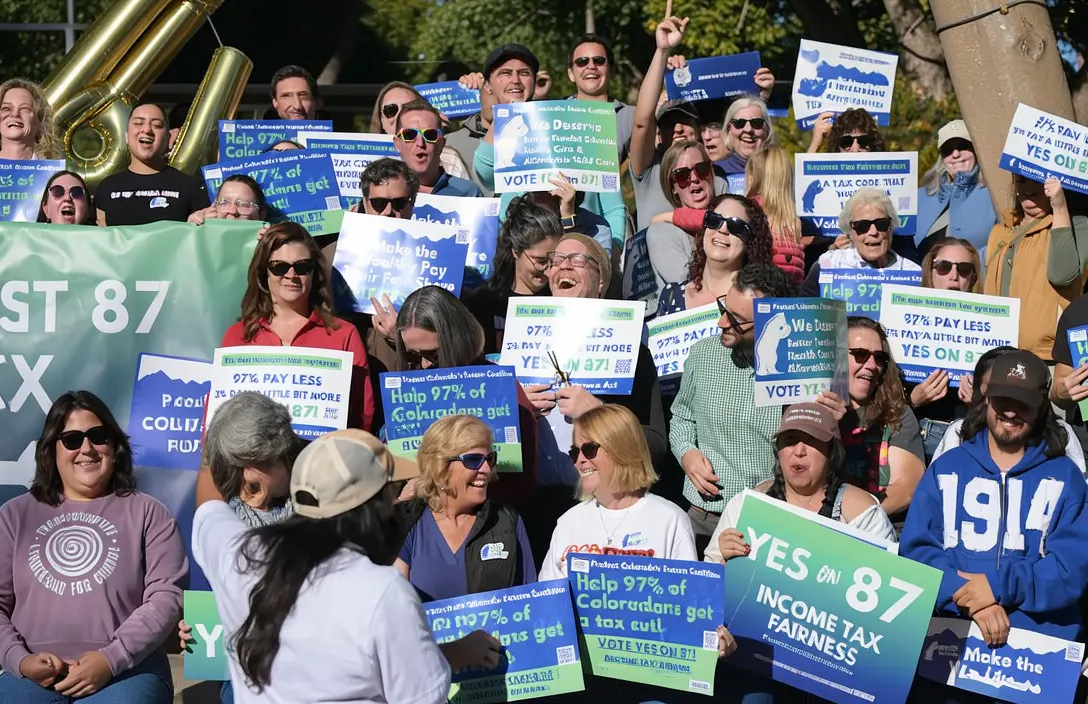
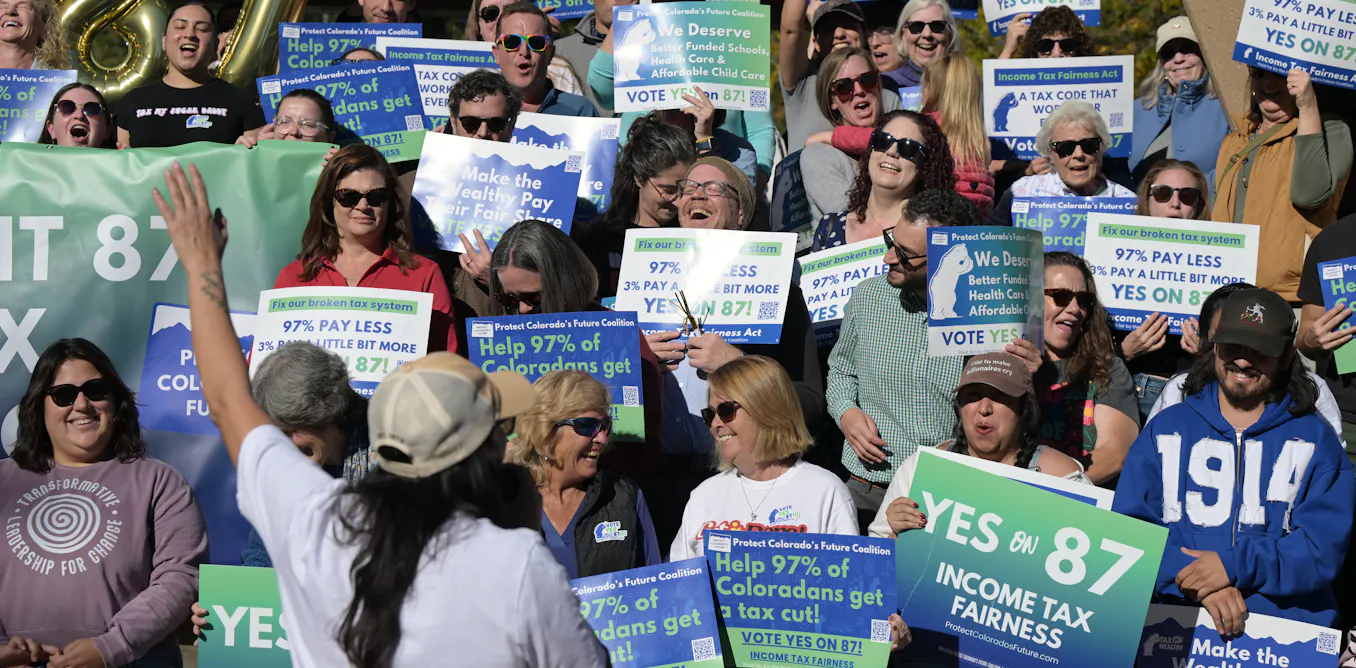
State efforts to tax the rich did relatively well in the 2026 midterm elections, following a series of state legislative moves in that direction in recent years. Although California’s Proposition 40, which would have imposed a one-time 5% tax on the net worth of the state’s roughly 200 billionaires, was rejected by voters, many Americans expressed support for hiking income taxes on the rich during the midterms (source ID: 1). The campaign against Proposition 40, which raised nearly $400 million, was led by billionaires such as Google co-founder Sergey Brin, who argued that the tax would harm the state’s economy and drive away wealthy residents (source ID: 2). [1] [2]
Taxing income proved to be a more successful strategy than taxing wealth. In Washington state, voters approved a measure to preserve its new 9.9% income tax on household income above $1 million, marking the state’s first personal income tax. Similarly, Colorado voters rejected Proposition 136, which would have capped the state’s income tax rate at 4.4%, but approved Amendment 87, a new graduated income tax that raises rates on households and businesses with incomes over $500,000 (source ID: 1). California voters also approved Proposition 3, which makes permanent the income tax rates enacted in 2012 for the state’s highest earners, with surcharges starting at 10.3% for incomes of $360,000 and going up to 12.3% for taxpayers earning over $721,000 (source ID: 1). [1]
State legislatures also introduced new taxes on high earners through legislative action rather than ballot initiatives. In Maine, legislators passed a 1% tax surcharge on income over $1 million in April 2026, while Hawaiian lawmakers created a new 13% income bracket for single taxpayers earning above $500,000 or couples filing jointly who make over $1 million. These efforts reflect a growing trend among states to target high-income individuals through both legislative and ballot measures, even in the absence of direct wealth taxes (source ID: 1). [1]
State efforts to tax the rich did relatively well in the 2026 midterm elections, following a series of state legislative moves in that direction in recent years. Taxing income proved to be a more successful strategy than taxing wealth. State legislatures also introduced new taxes on high earners through legislative action rather than ballot initiatives (Source ID: 1). [1]
Advertisement
Major changes to income taxes were up for a vote in five states during the midterms. Three of those ballot initiatives were proposals that sought to boost income tax rates on the rich or maintain those rates. All three prevailed. In Washington state, for example, voters backed a measure that will preserve its new 9.9% income tax on household income above $1 million. This “millionaire’s tax,” signed into law earlier in 2026, is the state’s first personal income tax (Source ID: 1). [1]
In addition to income taxes, state and local governments are boosting the tax revenue they get from wealthy constituents by levying special taxes on pricey homes that aren’t the owners’ primary residences. These initiatives have succeeded both in state legislatures and voting booths. Montana lawmakers, in April 2025, approved a new tiered property tax system, which took effect on Jan. 1, 2026. It raised property tax rates on vacation homes and short-term rentals to 1.9%, while primary residences and qualifying long-term rentals pay lower, tiered homestead rates (Source ID: 1). [1]
New York City has a new annual surcharge on certain properties, sometimes referred to as “pieds-à-terre,” that are not used as the owner’s primary residence. The surcharge applies to certain properties in New York City that are not used as a primary residence. For property tax years 2026-27 and 2027-28, the surcharge may apply to one-, two-, and three-family homes valued by the Department of Finance at more than $5 million (Source ID: 4). [4]
State efforts to tax the rich did relatively well in the 2026 midterm elections, following a series of state legislative moves in that direction in recent years. That might come as a surprise because a majority of voters rejected California’s Proposition 40. The much-publicized ballot initiative would have imposed a one-time 5% tax on the net worth of the state’s roughly 200 billionaires. Google co-founder Sergey Brin and several other billionaires spent nearly $400 million trying to persuade voters to reject it. Despite Proposition 40’s failure, many Americans expressed support during the midterms for hiking income taxes on the rich, and to a lesser extent, taxes on the second – or third or fourth – homes the very wealthy possess. Taxing income is proving a more successful strategy than taxing wealth (Source ID: 1). [1]
Advertisement
Major changes to income taxes were up for a vote in five states during the midterms. Three of those ballot initiatives were proposals that sought to boost income tax rates on the rich or maintain those rates. All three prevailed. In Washington state, for example, voters backed a measure that will preserve its new 9.9% income tax on household income above $1 million. This “millionaire’s tax,” signed into law earlier in 2026, is the state’s first personal income tax. Meanwhile, Colorado voters rejected Proposition 136, which would have capped the state’s income tax rate at 4.4%. They also approved Amendment 87, a new graduated income tax that raises rates on households and businesses with incomes over $500,000 (Source ID: 1). [1]
In addition to income taxes, state and local governments are boosting the tax revenue they get from wealthy constituents by levying special taxes on pricey homes that aren’t the owners’ primary residences. New York City has a new annual surcharge on certain properties, sometimes referred to as “pieds-à-terre,” that are not used as the owner’s primary residence. The surcharge applies to one-, two-, and three-family homes valued at more than $5 million and condominium and cooperative units valued at $1 million or more. The surcharge rates vary depending on the property value, with higher rates for more expensive homes (Source ID: 4). [4]
Sources
The Conversation – Articles (US)
Prepared with AI assistance from the cited sources.
The Cali Reporter newsletter
The stories worth your time.
California, the country, and what comes next. Join our free newsletter for reporting that keeps you informed.
More in Explainers
- Crisis Communication During the 2026 Air Traffic Ground Stop
The Federal Aviation Administration's response to the Nov. 13, 2026, ground stop highlighted critical missteps in public reassurance, according to a crisis communications expert.
- El Niño's Health Risks and Global Impacts
As one of the most powerful El Niño events on record approaches, global health risks are increasing, particularly in regions already vulnerable to extreme weather. Early warnings and preparedness measures are critical…
- El Salvador's Military Expansion in Haiti Amid Gang Violence
El Salvador's President Nayib Bukele has escalated military operations in Haiti, marking a significant shift in the region's approach to combating gang violence. The intervention, which includes the deployment of…